The moment temperatures drop below freezing, most people bury their best graphic tees under shapeless fleeces and turn into walking sleeping bags. It is a depressing surrender to the weather. You spend the warm months letting your chest broadcast your specific brand of humor, only to spend winter looking like an anonymous pile of damp down feathers.
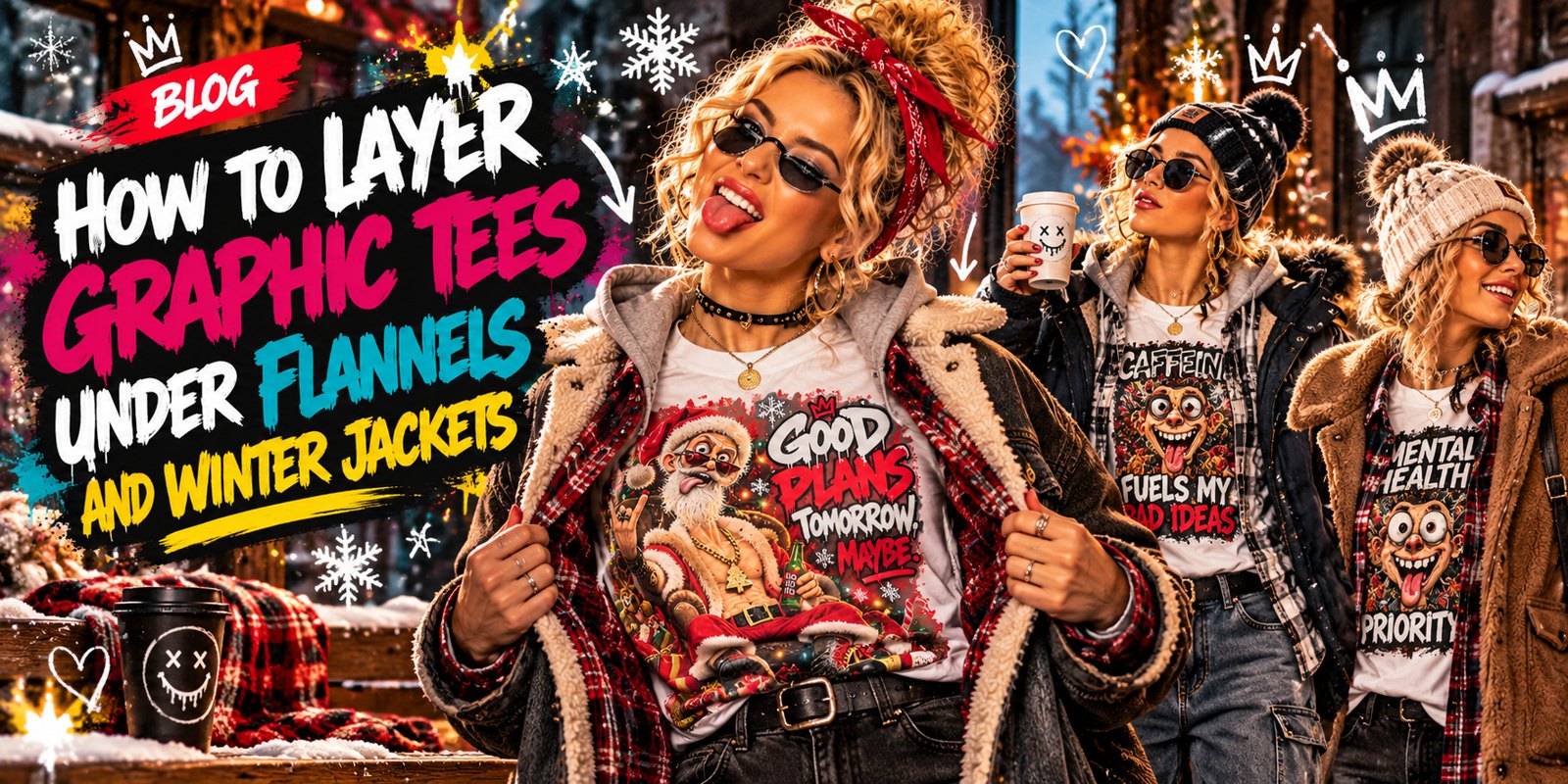
Mastering how to layer graphic tees rescues your wardrobe from cold-weather autopilot. The trick lies in treating your heavy outerwear as a frame rather than a burial shroud. Rugged flannels, stiff work coats, and oversized cardigans can give weird graphics extra punch, as long as you do not choke the print under unnecessary bulk.
Frame the Front Without Swallowing It
The fastest way to ruin a good joke across your chest is cutting it in two with brass teeth. Building an outfit around an illustrated top is fundamentally an exercise in architectural framing. When you bundle up against the cold, your torso becomes a compact gallery wall. Choke that space with poorly placed fabric folds or random cinching, and the entire visual punchline gets sliced into incomprehensible gibberish.
Think of an overshirt buttoned to the neck like closed window blinds versus fully open French doors. Fastening every button right up to your throat leaves only a cramped strip of printed cotton visible, forcing people to squint at your collarbone to decipher half an eyebrow or an isolated vowel. Leaving an overshirt entirely unfastened drops two clean, vertical borders along your ribs. That negative space immediately commands attention, locking peripheral vision onto the center print.
Heavier outerwear naturally requires a bit more tactical nuance when the temperature plunges. Walking down a freezing street with a heavy down parka flapping open like an untied sail is absurd. When wind forces your hand, slide the zipper pull halfway up your ribcage and stop. Leaving the upper half cracked wide forms an inverted triangle across your collarbones, shielding your midsection from drafts while keeping the central illustration fully legible.
Lapel structure matters just as much as zip height. A stiff denim jacket or a rugged corduroy overshirt holds its ground, preserving that central sightline even when you slouch across a diner booth. Flimsy nylon shells and floppy track jackets tend to collapse inward, masking the artwork the moment your shoulders drop forward. Seek outer garments with enough structural grit to stay out of the way without constant babysitting.
Stick to solid, unfussy coats when your chest graphic carries all the attitude. A clean charcoal wool jacket or a washed olive field coat supplies an unbothered border, quieting visual static so the central gag lands without friction. When an outer shell bristles with useless utility straps and clashing pull-tabs, the art gets swallowed. Treat your coat as a plain picture frame and keep the centerpiece front and center.
Let Busy Patterns Fight Clean Typography
Plaid operates on pure optical hyperactivity. Intersecting lines, contrasting colors, and dense woven grids create endless movement before you even factor in a base layer. When you toss an intricate, detail-heavy sketch into the middle of Buffalo check or classic Scottish tartan, the entire combination collapses into static. Your midsection turns into visual white noise instead of an intentional, balanced outfit.
The solution requires balancing grid complexity with sharp, unyielding type. Picture stepping into a dimly lit coffee shop where bold lettering cuts straight through intersecting plaid lines. A clean graphic print instantly provides a firm optical anchor, pulling the room's gaze straight to your center instead of letting eyes scatter across your shoulders.
This dynamic is why the Not My Problem Duck Shirt earns its keep under heavy wool overshirts. That level of dismissive humor needs the structural framing of a rugged pattern to land with maximum deadpan impact. The shirt suits anyone who prefers watching everyday chaos unfold from the safety of the perimeter while letting a single blunt phrase handle the talking.
Intricate line art and delicate sketches lose this turf war every single time. Against forty intersecting bands of dyed yarn, fine pencil-style graphics blur into vague gray smudges from five paces away. You need thick borders, confident lettering, and generous negative space to give the human eye an immediate resting spot between two heavy panels of lumberjack wool.
Balancing loud winter overshirts against your core tops ultimately comes down to deliberate friction. Do not try to neutralize the flannel, and never apologize for wearing a boisterous grid. Let the exterior roar along the borders, leave the front unfastened, and let a sharp, legible message slice cleanly through the textile storm.
Anchor Sarcasm Under Rugged Canvas
Heavy canvas shifts the entire emotional register of a subversive chest print. Stiff chore coats, waxed utility rigs, and blanket-lined shop jackets project an aura of blue-collar stoicism that acts as a shock absorber for chaotic wit. Throwing a biting joke under a flimsy zip hoodie risks projecting the energy of a frustrated teen at a food court. Slide that exact punchline beneath twelve ounces of rugged duck cloth, and you instantly look unbothered, competent, and completely in control.
The visual tension between utilitarian gear and dry cynicism works because heavy cotton provides solid structural weight. Rugged outerwear implies that you have fences to mend, timber to stack, or an engine block to inspect before noon. When that rigid exterior parts to show sharp satire, the joke reads as dry confidence rather than a desperate bid for attention. Rigid seams hold their shape along your collarbone, creating a clean frame that keeps the humor grounded.
Picture someone at a morning standup wearing stiff brown duck canvas over deadpan office humor. Slipping the Look Busy Panic Later Shirt under an open barn coat reframes daily workplace dread into collected, deadpan defiance. The jacket projects reliable craftsmanship and early mornings, while the slogan underneath quietly admits to running on pure adrenaline and runaway spreadsheets. That contrast neutralizes the whiny edge of corporate venting because the outer shell looks ready to haul gravel.
To balance the weight properly, keep the surrounding details simple. A broad notch collar or a corduroy lapel naturally guides focus toward the sternum, cutting clean vertical borders on either side of the chest. Fasten the bottom button to anchor the waistline while leaving the midsection open to display the central print. Structured shoulders prevent oversized chest text from collapsing, ensuring the joke stays legible instead of folding into random creases.
The appeal rests entirely on the friction between industrial durability and calculated slacking. Heritage workwear survived scrap yards and frozen loading docks, making it the ideal armor against corporate absurdity. You secure the warmth of thick woven cotton while allowing sharp text to deliver its cold assessment of the room.
Matchy Jackets Murder the Whole Joke
Standard style advice loves to preach tonal coordination. The usual rule insists that an outer zip or button-up must echo the exact secondary ink shade stamped on your torso. Resist that urge immediately. Deliberate harmony turns an irreverent design into an overthought stage costume, draining every scrap of deadpan humor from the entire look.
Think of a rehearsed team warmup suit compared to throwing a beaten field jacket over whatever was on the bedroom chair. One looks like an anxious bid to present an approved uniform to the room. The other signals that you grabbed heavy insulation simply because the temperature plummeted outside, not because you spent twenty minutes holding color swatches under fluorescent bulbs.
“Coordinating your jacket hue to your chest print turns an irreverent joke into an overthought uniform.”
This is why styling the Too Weird To Care Graphic Tee works best when your outerwear could not care less about what sits underneath. Slipping that unapologetic title beneath an earthy olive utility shell or a faded black denim jacket creates instant visual friction. The blunt defiance of the print cuts right through the rugged neutrality of the coat, delivering the punchline without begging for approval.
High-effort coordination screams that you crave validation from strangers on the sidewalk. When your zipper trim, knit beanie, and chest text all land in the exact same shade family, the irony collapses on arrival. You end up looking like branded convention staff or a promo mascot rather than someone dressing with sharp personal taste. Muted outer shells provide an unbothered baseline, letting weird humor hit with dry, spontaneous confidence.
Stick to heavy canvas in dull slate, washed workwear tan, or deep charcoal. Let the shirt operate on its own independent logic underneath. The second an observer realizes you deliberately color-matched your winter coat to the phrase printed across your ribs, the joke evaporates entirely and your outfit simply reads like finished homework.
Soft Knits Balance Sharp Slogans
Thick wool cardigans pull off a strange magic trick against unhinged graphic prints. While denim or leather sharpens an edgy slogan, lofty yarns cushion the blow. The resulting friction between grandad-core warmth and cynical humor creates an effortless balance, steering your ensemble away from hostile posturing into approachable wit.
A roomy button-up sweater naturally splits down the torso, carving out an unobstructed window straight down your midline. Ribbed knit lapels act like velvet ropes around your chest print, holding visual clutter in check while letting the punchline slip out in controlled doses. You get reliable winter insulation across your shoulders without suffocating the typography beneath stiff closures or heavy flaps.
Picture sitting on a couch at family dinner with a relaxed knit framing an absurd slogan. While relatives debate holiday logistics or swap neighborhood gossip, the oatmeal wool signals total domestic peace and polite engagement. The ridiculous phrase peeking out beneath your collar bones quietly proves you have not folded under the pressure of small talk, but you look far too cozy to start an actual argument over pie.
- Fasten the bottom anchors: Latching only the lowest two buttons keeps the waistband snug against your jeans while opening up a wide triangle across the chest to showcase the slogan.
- Embrace coarse gauge yarns: Chunky waffle weaves and flecked Donegal wool supply enough tactile grit to prevent glossy screen-printed ink from feeling flat or synthetic.
- Keep the neckline flat: Pairing a massive shawl collar with a puckered tee crewneck invites messy fabric bunching; stick with a clean, low-profile V-neck cut.
- Drop-shoulder tailoring lets thick wool drape loosely around your arms, keeping the entire profile relaxed rather than looking like an anxious office uniform.
Fluffy texture disarms sharp cynicism. When biting quips rest behind something visibly soft and traditional, the attitude settles into relaxed, playful mischief instead of hostile complaining. You stay warm, the joke lands cleanly on your own terms, and your outfit functions effortlessly in living rooms where abrasive street styles feel completely out of place.
Plan an Exit Strategy for Radiators
Winter dressing often pretends the entire season unfolds on a pristine, windswept sidewalk, ignoring the aggressive reality of indoor steam pipes. Cold-weather style is rarely about braving sub-zero gusts for hours; knowing how to layer graphic tees is actually a tactical exercise in managing inevitable thermal whiplash. Every heavy parka and wool coat is temporary armor that you will discard the minute you clear a doorway, leaving your tee to carry the entire visual burden on its own.
Imagine walking in from a snowstorm into a boiler-heated corner pub where the outerwear gets abandoned within twenty seconds. The entryway pegs groan under sodden duffle coats, the cast-iron radiator near the back booths hisses like an agitated tea kettle, and the indoor atmosphere feels tropical. If your whole aesthetic strategy depended entirely on a shearling collar framing your chest print, you are suddenly stranded. The coat drops to a barstool, and your carefully considered presentation instantly collapses into an accidental compromise.
Your base layer needs to hold its ground without leaning on an overshirt for structural integrity. A flimsy, shapeless knit that crumples into origami against your stomach makes sharp, sarcastic graphics look sloppy. A proper cotton tee requires a resilient collar, genuine drape, and enough visual weight to hold its own against rugged denim or thick wool trousers. When the room hits eighty degrees, nobody cares how deliberate your corduroy jacket looked out on the icy asphalt.
Proportions turn unforgiving the second that outerwear vanishes into a coat check. A rugged overshirt can hide an awkward hemline or strange bunching around your belt line, but stripping down exposes every cut and seam to direct scrutiny. Before leaving home, test the outfit backward. Drop the jacket onto the bed, take off the flannel, and critique the standalone shirt in the mirror. If the graphic looks weak, stranded, or incomplete without surrounding textures to validate it, pick a different top.
When the heavy fleece finally hits the back of a wooden booth, your chest print should command the table with total confidence.
Never build an outfit that only survives while you are freezing.