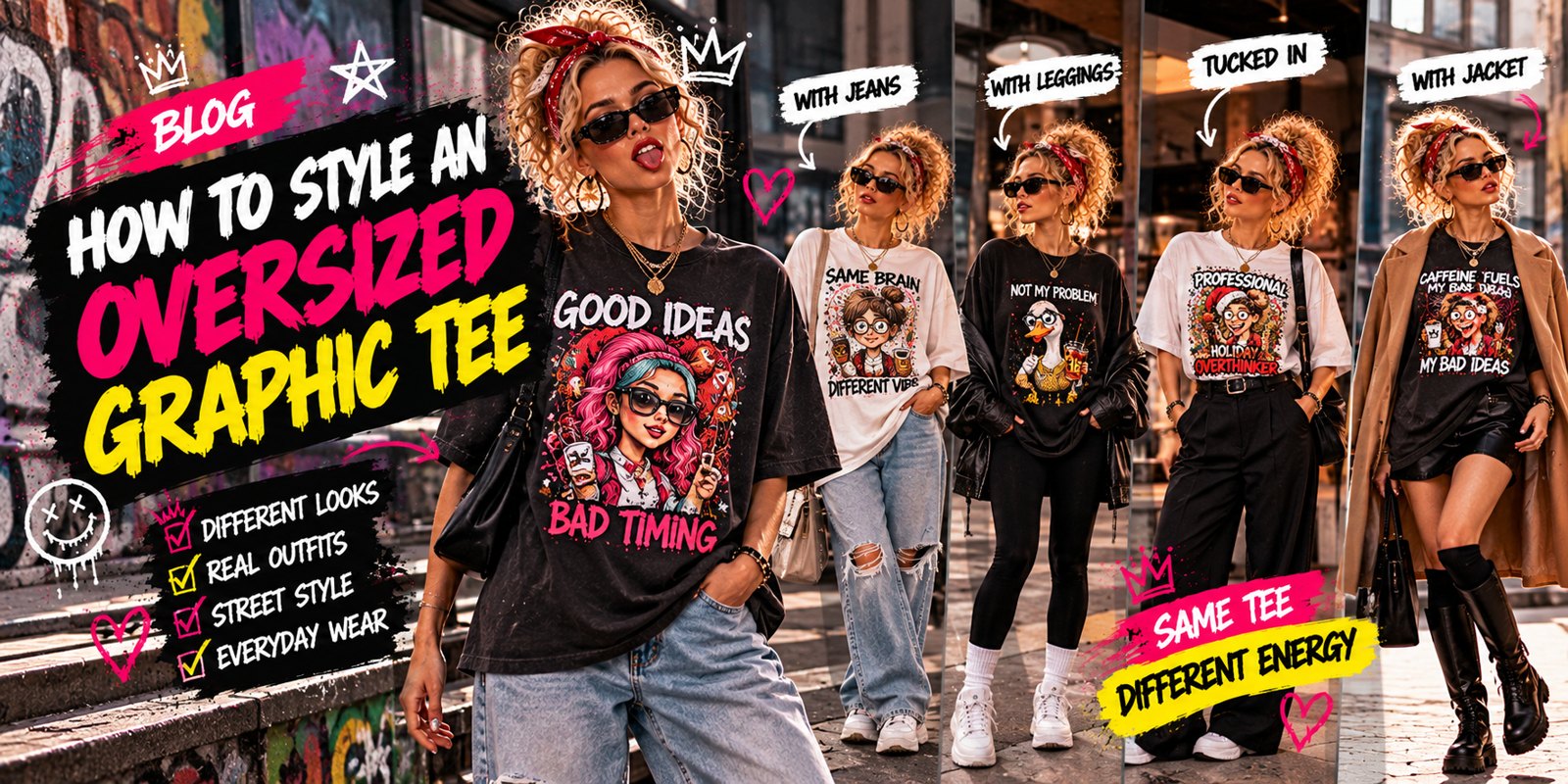
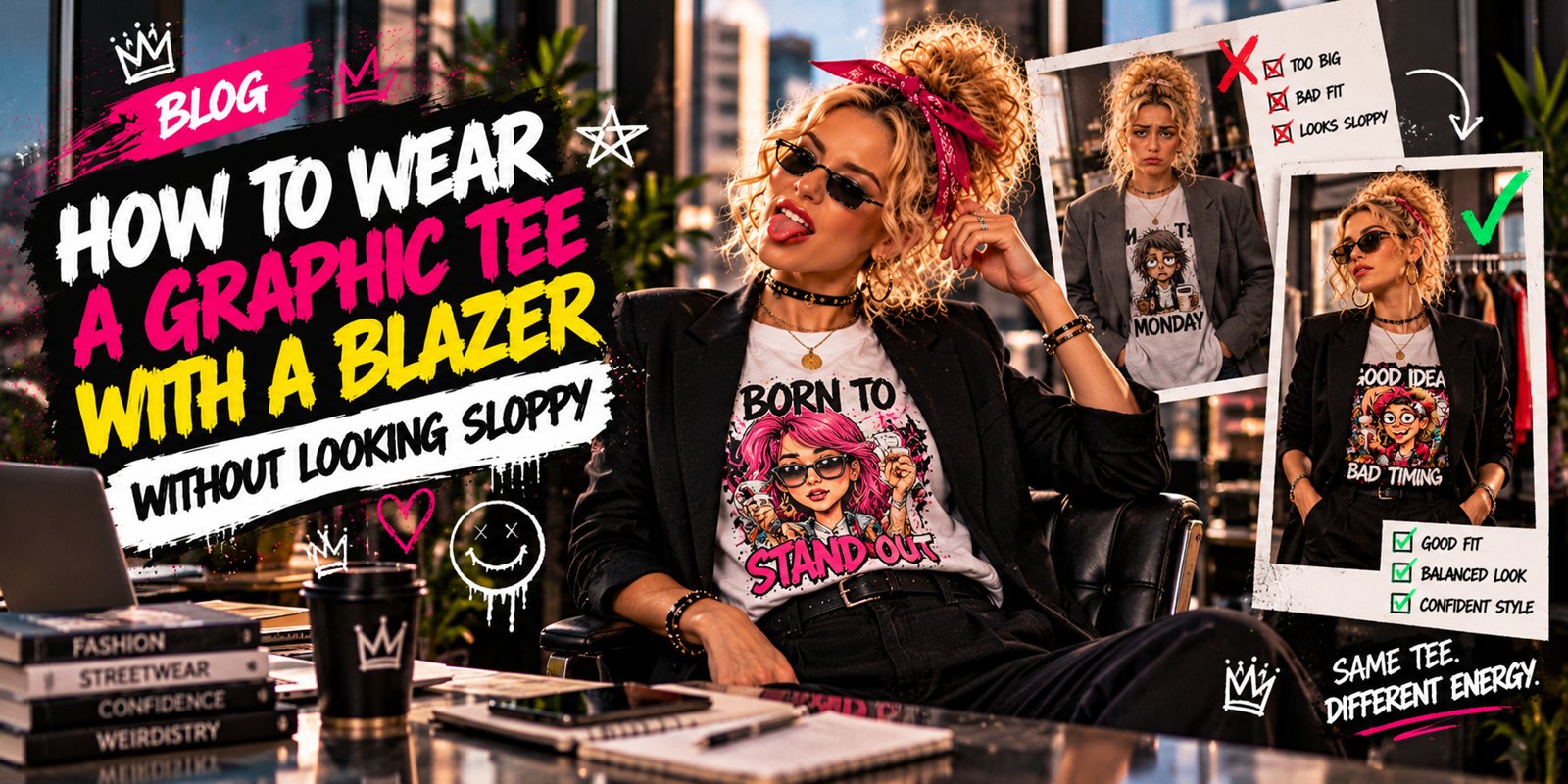
Wearing a graphic tee under a blazer is an easy outfit cheat code, but miss the mark on fit and you instantly look like an out-of-touch executive pitching an unwanted smartphone app. The gap between effortless high-low tailoring and chaotic startup cosplay is razor-thin. One sloppy detail turns sharp contrast into a laundry-day emergency.
Pulling off a graphic tee with blazer setup requires treating the pairing like an intentional style collision rather than an accident. You want the architectural structure of classic suiting paired with the raw, self-aware punch of internet culture.
When executed with precision, the jacket frames your humor instead of swallowing it whole. It signals that you know traditional dress codes inside out, but chose something considerably more interesting instead.
Get the Neckline Geometry Right First
The neckline establishes order before anyone processes the illustration across your chest. When you slide structured suiting over casual jersey cotton, the collar ring serves as the structural foundation for both lapels. If that ribbed crew neck sits firm, circular, and centered against your collarbone, the tailored fabric drops neatly into place with clean symmetry. That crisp circle signals intentional styling instead of a haphazard morning scramble.
The moment that band loses tension, the whole ensemble falls apart. Picture a sharp wool blazer thrown over a worn collar that dips into an accidental scoop, instantly making the jacket look like a borrowed costume. Instead of an artful contrast between sharp tailoring and street art, you get sagging cotton that folds unevenly across the sternum. That slumping border creates sloppy dead space, causing the jacket neck to float backward off your traps instead of resting flush against your spine.
A proper crew neck requires substantial ribbing that resists the shifting friction of heavy outer layers. Flimsy, flimsy collars crumple into warped waves the moment shoulder seams press against them. You need a dense, reinforced band that rests flat against your throat, drawing a crisp horizontal boundary right above where the jacket buttons fasten. That sturdy round rim acts as a direct foil to the steep diagonals of notched lapels.
Scoop necks and plunge cuts fail completely in this setting because they mimic the jacket plunge without offering any stabilizing contrast. Two concurrent plunging lines exaggerate your chest drop and swallow the artwork whole. A high, tight neckline locks the upper frame, giving the central print a neat canvas to sit within without bunching up under the armpits.
Tailoring depends entirely on flush contact points around your upper body. If the base layer crumples, the structured jacket sitting on top simply amplifies every flaw. Check the mirror before you button up: if the collar band puckers or gapes away from your neck, swap it for a pristine collar. Getting that circular geometry right turns an ordinary casual layer into an undeniably sharp style statement.
Lean Into Workplace Irony
The real pull of sliding tailored suiting over an irreverent print lives in the deliberate friction between corporate poise and unvarnished truth. A structured jacket tells the room that you respect deadlines, client expectations, and professional decorum. When the garment underneath counters that discipline with sharp workplace cynicism, you create an entertaining contrast that sticks in people's minds.
Tailoring serves as an effective straight man for deadpan humor. Show up to an office park in sweatpants with an ironic quote across your chest, and observers simply assume you threw on yesterday's laundry. Place that exact sentiment under clean lapels, however, and the intent shifts completely. The crisp outer shell shows you understand the assignment, giving you license to let your chest print deliver the punchline.
Picture stepping into a collaborative cross-functional sync with the Professionally Unhinged Shirt layered under a sharp blazer. The jacket satisfies every visual standard required by project managers across the table. Meanwhile, the shirt name captures that specific brand of digital burnout familiar to anyone who has endured back-to-back status calls that could have been handled in an instant message.
To keep the visual gag landing properly, ensure your tailoring remains deliberate and sharp. Clean seams, a neat collar, and balanced proportions give satirical copy credibility. If the outer jacket looks sloppy or rumpled, the joke disintegrates and leaves you looking disorganized instead of witty. You want colleagues to appreciate the clever contrast, not wonder if your morning routine fell apart.
Treating formal layers as a frame for honest commentary transforms stiff business conventions into something distinctly personal. You demonstrate competence through clean lines while letting your chest print quietly dismantle corporate pretension. That sharp duality commands attention without ever crossing into hostility, striking the sweet spot between boardroom capability and creative autonomy.
Ditch the Fitted Corporate Suit Jacket
Standard sartorial advice insists that pairing casual cotton with sharp tailoring requires a razor-thin, nipped-at-the-waist suit jacket to balance out the informality. That logic is fundamentally broken. Squeezing a casual print beneath a stiff, ultra-fitted corporate jacket never looks intentional or polished. It gives off the panicked energy of an attendee whose luggage was delayed at the airport, leaving them stranded in their hotel undershirt ten minutes before a conference panel.
Formal suit coats are patterned specifically to press against the rigid starch of an Oxford collar. Without that structured barrier, a tight two-button garment caves inward across your sternum, puckering at the fastenings and squeezing your torso into an awkward hourglass. When you throw a stiff two-button suit jacket over the Look Busy Panic Later Shirt, the pulling tension bunches across your midsection and distorts the artwork into an unreadable fabric fold. The visual punchline vanishes into a jumble of trapped wrinkles.
The solution is stepping completely away from boardroom wools and adopting unstructured, boxy tailoring instead. Soft shoulders lacking heavy foam padding drape naturally down the arms, preventing that combative stiffness between formal canvas and jersey knit. A jacket with a wider chest drop leaves the graphic print flat and visible, allowing the message to breathe instead of trapping it in an aggressive chokehold against your ribcage.
Pay attention to the side seams and the cut below the chest. Garments with a straight, uninhibited fall from the underarm down to the hemline provide an open gallery for your chest print. Double vents or soft unvented backs keep the hem sitting quietly rather than kicking outward like a peplum every time you take a step.
Relaxed tailoring treats your casual layers with respect rather than trying to strangle them into conformity. By swapping out narrow corporate shells for looser cuts, you transform what could feel like a messy packing mistake into a crisp, purposeful silhouette that owns the room on its own terms.
Anchor the Look with Relaxed Trousers
Skinny denim collapses your proportions the second you combine it with tailored outerwear. Clinging fabric around your calves produces a harsh inverted triangle, mimicking an uncomfortable mid-2000s garage rock frontman who stumbled off a tour bus. When the lower half tapers down like an ice cream cone, every ounce of fabric up top feels top-heavy, accidental, and clumsy.
Outer layers constructed with shoulder structure demand real visual weight below the waist. Tucking an illustrated jersey into tailored layers plays with contrasting codes, so your trousers need enough substance to hold that tension. Clingy legs surrender to the volume above, making the entire getup seem like an indecisive grab from yesterday's laundry pile.
“Skinny cuts collapse your proportions, transforming relaxed tailoring into an awkward mid-2000s garage rock throwback.”
Swapping faded distressed denim for wide-cut olive fatigue pants to ground the upper half of the outfit solves the problem immediately. The dense military cotton twill brings utilitarian grit to crisp lapels, while the earthy olive wash keeps your chest artwork centered without competing for attention. You gain easy mobility while establishing a grounded, deliberate frame.
High-volume pants also give footwear the stage it needs. Roomy hems break gently over heavy commando-sole derbies, canvas low-tops, or chunky penny loafers without bunching up in frantic accordions above your ankles. When cloth drapes straight down from your hip bones, the vertical line looks confident, calm, and uncluttered.
- Dark raw denim: Stiff selvedge twill with a straight leg keeps the perimeter architectural and rugged.
- Relaxed single-pleat trousers: Front pleats build gentle fullness through the thigh that matches the natural roll of jacket fronts.
- Wide-leg cotton chinos: Casual mid-weight twill that softens the vibe while preserving clean, continuous lines.
Target a leg opening that grazes your shoe with a subtle, clean break or an intentional crop just above the ankle. Giving your legs actual breathing room ensures your styling reads as mature creative expression rather than a messy rush out the front door.
Use the Jacket to Frame the Palette
Color discipline establishes whether this tailored combination reads as sharp curation or chaotic thrifting. Treat your outer layer like a heavy wooden border on an exhibition wall. When vivid, hyperactive illustrations sit inside equally saturated or aggressively checked suit coats, the entire silhouette vibrates with nervous energy. An unbothered neutral creates clear boundaries, isolating your chest graphic so spectators can process the visual joke instantly.
Picture throwing an earthy tobacco corduroy jacket over the CEO of Bad Decisions Shirt for post-mortem drinks following a disastrous product launch. The dry corporate sarcasm of the title hits cleanly because the surrounding corduroy absorbs background light and signals grown-up poise. You openly claim ownership over every terrible executive call made during the quarter, but the muted outer layer keeps the presentation poised rather than disorderly.
Building a functional perimeter comes down to tonal weight. If your shirt carries bright saturation, your jacket should remain quiet and understated.
- Deep charcoal hopsack wool provides a matte backdrop that swallows ambient shine, letting neon inks jump forward cleanly.
- Unwashed dark navy twill brings traditional naval crispness without the severe, funeral-director gravity of jet black.
- Washed olive or tobacco canvas grounds modern internet humor in functional workwear grit.
- Selecting warm stone or heather gray linen keeps darker screen prints breathable under midday sun.
Resist the temptation to color-match your lapels to an accent tone hidden in the ink. Throwing an electric purple jacket over a shirt simply because the design features violet typography feels painfully rehearsed, like a costume worn by a television presenter. True style relies on contrast and nonchalance. Let the tailored wool provide the steady architecture, and let your cotton center supply the sharp wit.
Pure jet-black tailoring demands extra restraint here. Solid black creates aggressive, high-contrast borders that look harsh under office fluorescents or harsh track lighting. Swapping rigid black for deep espresso, slate, or faded graphite softens the boundary, ensuring your outfit looks deliberate and composed instead of thrown together in the dark.
Know Exactly Where the Look Belongs
Context dictates whether matching unstructured tailoring with bold illustrations reads as deliberate styling or an accidental laundry-day compromise. Take this outfit into a probate courtroom, a conservative wealth management firm, or a traditional board meeting, and the room reads you as unprepared rather than discerning. Structured suiting carries centuries of institutional decorum, and dragging an irreverent print into those rigid environments rarely lands as clever subversion. You are aiming for calibrated aesthetic friction, not an uncomfortable review with human resources regarding professional standards.
The sweet spot happens wherever modern business meets relaxed social energy. Creative agencies, design consultancies, brand pop-ups, and late dinners all operate in that fluid smart-casual territory. In those spaces, an ironed oxford collar signals that you might be guarded, stiff, or clinging to a corporate security blanket. Conversely, walking in wearing a faded hoodie or gym shorts suggests you checked out before selecting an outfit. Tailored outerwear layered over punchy artwork bridges the divide cleanly, offering poise without the corporate baggage.
Picture heading to an evening gallery opening or a bustling neighborhood bistro where standard office attire feels stiff and plain casual clothes feel lazy. You need an ensemble that moves effortlessly between appraising framed canvases and sliding into a crowded corner banquette over natural wine. The lapels provide instant architecture the second you step across the threshold, while the center screenprint keeps the entire silhouette grounded, modern, and immune to stuffiness.
Read the environment before you step out the door. If a venue features plush carpeting, hush-toned acoustic paneling, and patrons in calfskin dress shoes, stick to traditional shirting. But when you walk into exposed brick, warm pendant bulbs, polished concrete floors, and a room full of clean leather sneakers, you are in prime territory. Dressing well is about recognizing social physics, understanding when to honor classic boundaries, and knowing when an injection of humor actually improves the room.
Hold the tailored line outside, let the artwork speak inside, and own the friction.