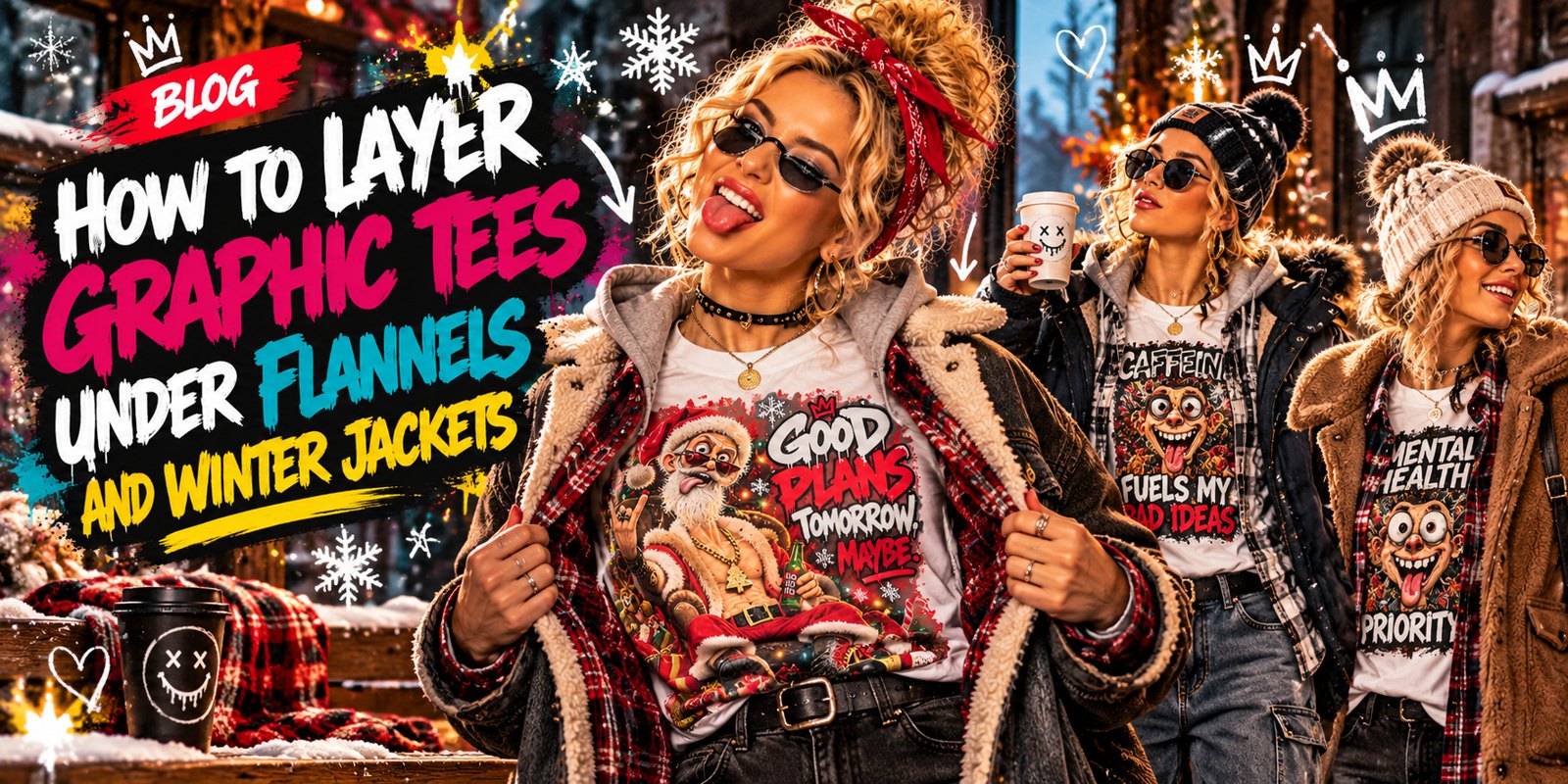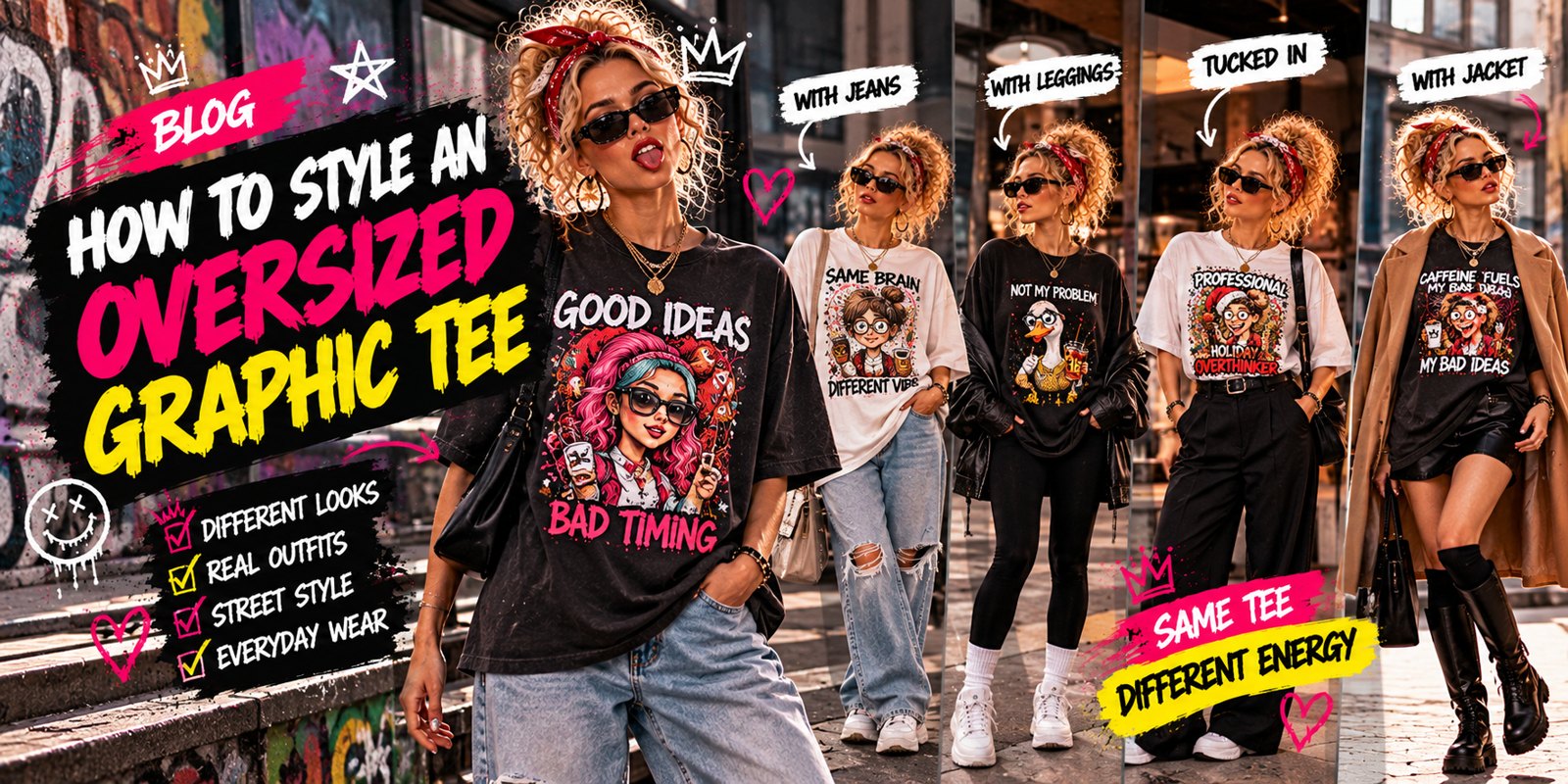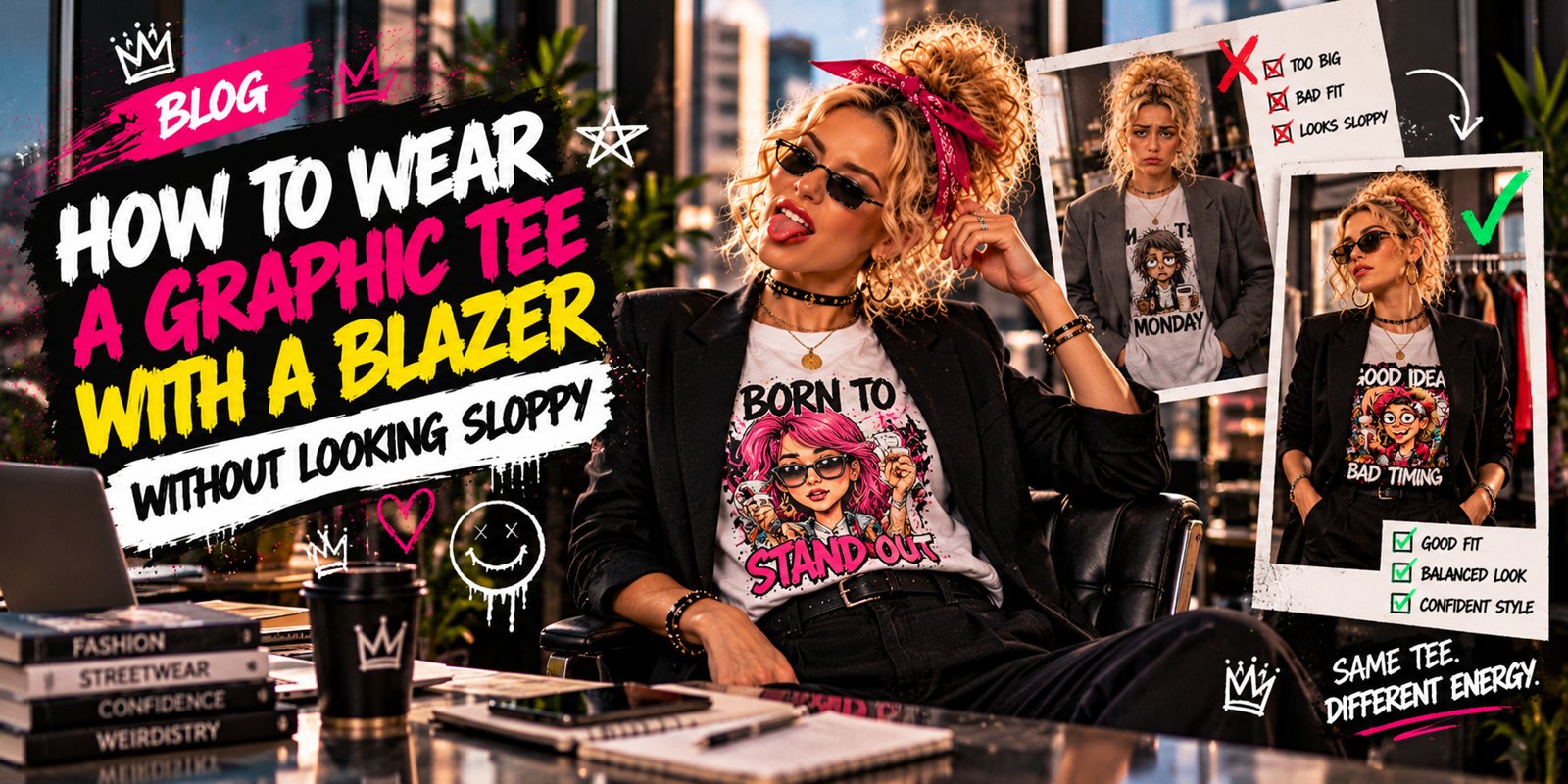
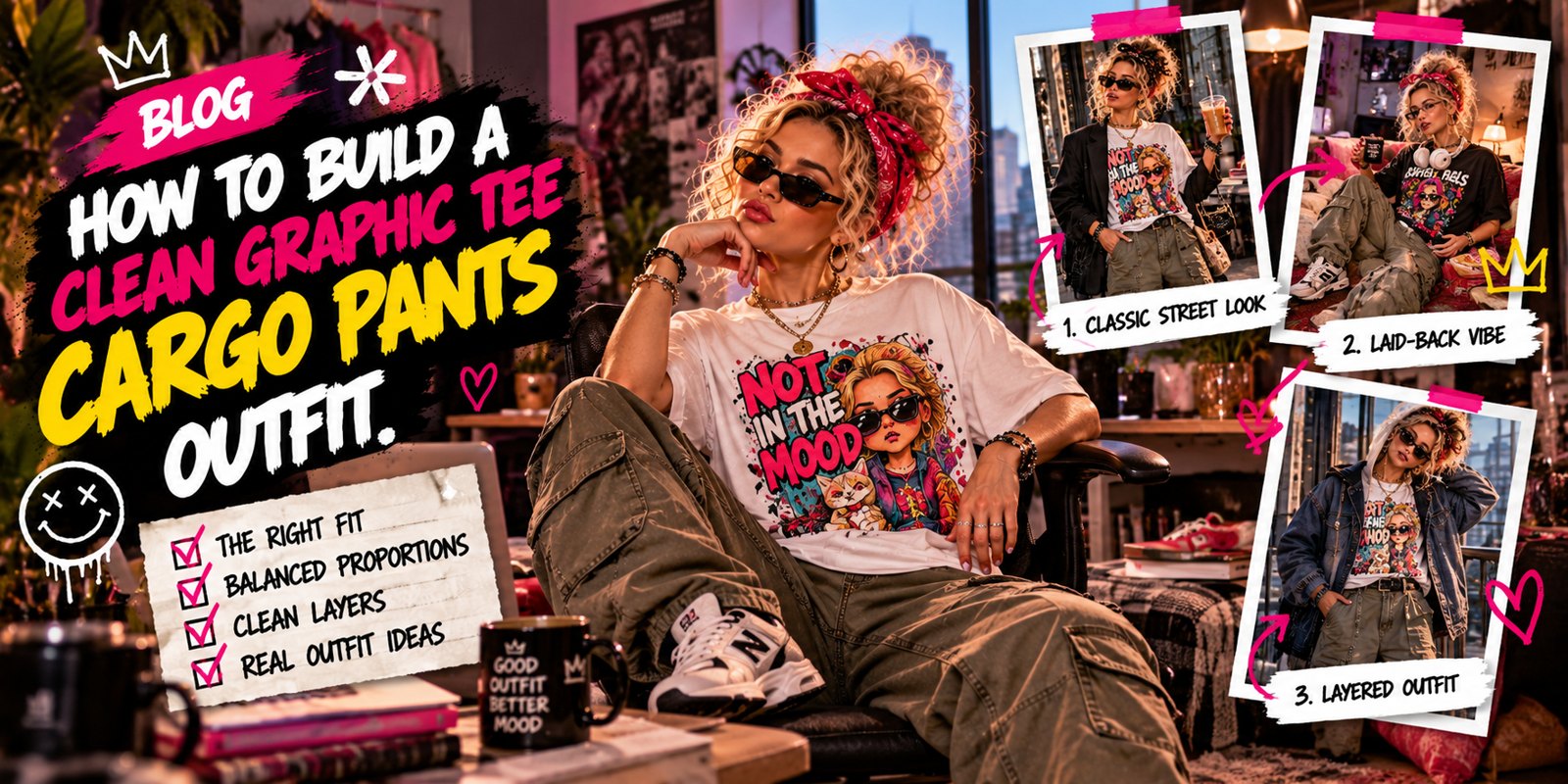
Cargo pants bring serious utilitarian bulk to an outfit, meaning a sloppy shirt choice quickly turns deliberate streetwear into looking like you got lost inside a military surplus tent. Heavy cargo bellows, deep seams, and metallic snap buttons draw eyes straight toward your shins unless your torso presents a firm anchor.
Pulling off a clean graphic tee cargo pants outfit demands treating those tactical bottoms like architectural scaffolding. Slapping on a limp, oversized crewneck makes you look entirely accidental, while a crisp, deliberate graphic gives the entire silhouette a distinct center of gravity.
Dialing in this visual weight lets you wear weird internet humor with genuine intent instead of drowning in fabric.
Anchor the Volume of Wide Utility Legs
Wide utility trousers dominate your lower half the second you pull them on. Thick twill, reinforced knee panels, and pleated bellows pockets generate authentic physical heft that drags the eye downward. If you throw on an unstructured top without planning for that density, those cavernous legs swallow your frame completely. You get left with an awkwardly bottom-heavy silhouette that looks visibly disconnected from the waist up.
The most glaring styling misstep stems from totally ignoring vertical scale. A skin-tight crewneck under billowing multi-pocket utility pants leaves the upper body looking comically pinched like a cartoon lightbulb. You end up with shrunken shoulders trapped over an ocean of rippling khaki, proving that stark contrast only works when both halves agree on a shared sense of volume and purpose.
Fixing this balance requires claiming equal real estate across the chest and shoulders. You need an oversized cut or a boxy drape that refuses to get bullied by deep side seams and protruding storage compartments. Choosing a tee with dropped shoulder seams and a wider, squared torso establishes a firm horizontal boundary. That broader profile ensures your top half commands just as much visual authority as the tactical twill swirling around your calves.
Neckline construction also plays an essential architectural role here. A thin, stretched-out collar immediately puckers and wilts against the sheer density of heavy pocketed trousers, projecting accidental sloppiness rather than calculated styling. Selecting a thick, tightly ribbed neckline creates a crisp upper border that stays defined through hours of movement. It provides your collarbones with a sharp, disciplined anchor against the visual commotion below.
Physical proportions demand deliberate parity. When your graphic print claims its perimeter with a dense, substantial drape, the sprawling pleats, bulky metal rivets, and oversized side flaps below settle into place as an intentional base. The whole silhouette immediately feels grounded, confident, and structurally sound. You look like you assembled an outfit with genuine aesthetic awareness instead of looking like two completely unrelated wardrobes collided in the dark.
Use Tucks to Reveal Pocket Lines
Letting a long shirt hem fall straight down over high-rise trousers creates an instant visual blackout across your midsection. The excess fabric swamps your hips, swallows the slant pockets, and converts your torso into an unbroken rectangular monolith. Instead of showing off clean seam lines, an unchecked hem completely erases the natural break between your chest and thighs.
The top tier of functional utility pants holds key structural cues: heavy rivet details, thick belt loops, and slash pocket openings angled across the pelvis. Covering that hardware under an uninterrupted curtain of cotton ruins the proportions and turns deliberate styling into pure accident. Revealing the waistband restores balance, giving your frame a clear architectural division that anchors heavy canvas legs below.
Tucking the front hem of the Same Brain Different Vibe Oversized Graphic Tee just behind a belt buckle breaks up the torso while keeping a relaxed drape at the sides. This styling suits anyone who shares a single chaotic train of thought with a close friend yet dresses on completely contrasting wavelengths. Anchoring that front edge draws the gaze upward, supporting the joke while preventing excess fabric from pooling over your pocket openings.
Leaving the back and flanks uncinched preserves the laid-back mood. A strict military tuck reads like someone arriving to present spreadsheets at an underground party, but an offhand front tuck signals relaxed intent. It also ensures you can easily slip your hands into deep hip pockets without fighting through a wall of bunched jersey cloth.
Step back and check the balance in the mirror. Exposing the front hip construction and pocket angles instantly lengthens your lower half, giving wide legs and bellowed knee pouches room to breathe. You maintain the street-level slouch while proving that your graphic tee cargo pants outfit was put together on purpose rather than by random morning luck.
Balance Print Placement Against Pocket Clutter
Cargo pants carry an enormous amount of visual static. Between bellows pockets, snap fasteners, heavy seam reinforcements, and dangling utility ties, the bottom half of your frame looks like an army surplus stockroom mid-inventory. If your top stays completely blank or features tiny, scattered micro-prints down the sleeves, anyone glancing your way naturally tracks straight down to your knees. Your silhouette ends up bottom-heavy and disjointed, with your torso reading as empty negative space.
Countering that tactical commotion requires an undeniable focal point right at eye level. A centered chest print acts like an optical counterweight, staking claim to the upper torso and forcing the entire combination into crisp alignment. Instead of letting all the design energy sink into your shins, a concentrated graphic gives an observer a clear primary target before their gaze starts cataloging pocket flaps and side stitching.
This strategic balance is where the Zero Clues Full Confidence Shirt proves its worth for anyone whose everyday routine runs on unapologetic bravado backed by zero prep work. Putting that specific attitude across your sternum establishes immediate intent, keeping attention locked on your upper chest rather than letting an onlooker stare aimlessly at knee zippers and bellows pleats. People register the punchline first, notice the relaxed posture second, and treat the tactical lower half as supporting background scenery.
Compare that to the mistake of wearing an all-over patterned print or a tee with logos splashed across the lower hemline. Pitting two frantic zones against each other turns your body into an open territorial dispute between competing textures. When your trousers already feature dimensional seams and heavy pocket flaps, your shirt needs to deliver its visual message in one focused, deliberate strike zone.
Think of the overall look like an editorial magazine page. The wide utility trousers supply the structural borders and functional texture near the bottom, while the center chest graphic functions as the bold headline across the top. As long as your print commands the space above your ribcage, you can wear as much tactical hardware down below as you want without surrendering control of your silhouette.
Stop Wearing Sleek Minimalist Shoes Here
Standard style forums love to insist that a pair of sleek white leather tennis shoes goes with every bottom in existence. That lazy rule fails miserably the second you step into wide utility pants. Slender court footwear completely surrenders control over your lower proportions, instantly transforming a deliberate relaxed silhouette into a sloppy accident.
Wearing narrow leather tennis shoes under twenty-inch pant cuffs makes your feet look like toothpicks poking out of a canvas parachute. The entire profile of the shoe completely drowns underneath cascading fabric. Instead of hovering cleanly at the ankle, the back of each hem drags across dirty pavement, collecting puddle water and chewing through threads because there is no heel counter wide enough to catch the drape.
“A cavernous leg opening needs a structural shelf, not a delicate slipper that lets your hems mop the street.”
Oversized trousers loaded with bellowed pockets and thick seams demand a solid foundation. If your pants simply taper into thin air or disappear into a paper-thin flat sole, the visual line collapses and your entire frame looks ungrounded. Rigid utility fabric needs physical resistance below it to catch the break and maintain an intentional shape.
- Commando-sole work boots: Dense rubber lugs and thick storm welts create a rigid barricade, stopping wide hems inches above dirty asphalt.
- Padded retro skate sneakers: Broad cupsoles and puffed-up tongues act like doorstops for loose cuffs, forcing the pant legs to bunch cleanly instead of pooling.
- Chunky technical trail shoes: Deep tread patterns and beefy, flared heel geometry provide the functional bulk needed to balance expansive leg openings.
Selecting footwear that projects comfortably past the perimeter of your foot solves the pooling problem permanently. Wide leg openings require a sturdy bumper to prevent extra fabric from dragging across wet sidewalks or bunching under your arches. Give heavy utility canvas a substantial platform that pushes back, and the casual geometry of your entire outfit instantly locks into place.
Frame the Front Graphic with Open Layers
Zipping a fleece jacket all the way to your neck completely cancels out whatever statement you printed across your chest. When lower temperatures show up, treat your outermost garment as an architectural frame rather than a closed cocoon. Leaving an overshirt or light jacket entirely unbuttoned cuts two razor-sharp columns down your torso, deliberately corralling the eye toward your center graphic instead of letting it wander off into loose folds.
An unbuttoned heavy canvas chore jacket worn over the Not My Problem Duck T-Shirt creates sharp vertical lines that echo the utilitarian vibe of the pants below. That pairing thrives because the thick cotton drill establishes firm, clean borders. It gives the shirt's detached, zero-effort humor an uncluttered stage, preventing the message from getting drowned out by heavy leg pockets or metal snaps.
- Stiff denim trucker jackets cropped near the waistline, offering a rigid exterior perimeter that sharply contrasts against soft combed jersey.
- Flannel button-downs featuring bold buffalo checks, introducing saturated color patterns that border a muted center print.
- Military field overshirts in rugged ripstop, which harmonize with utility pants through shared pocket stitching and brass hardware.
- Wide-wale corduroy shackets that introduce raised ribbing textures alongside flat screen-printed ink.
Structural resistance makes or breaks this whole visual setup. If you throw on a flimsy rayon party shirt, the fabric instantly collapses against your ribs, twisting into messy folds that actively compete with bulky leg pockets. You need an exterior layer dense enough to hold a clean, vertical crease on its own, staying distinct and separated from your tee even as you walk.
Choose the Right Room for Relaxed Utility
Even the sharpest casual look possesses an invisible expiration date dictated by the four walls around you. Pairing wide-leg utility trousers with a satirical printed top builds a silhouette designed entirely for off-duty hours. Because neither piece bows to traditional tailoring, the match thrives in rooms that celebrate personal taste, casual movement, and creative freedom. When you step into heavier canvas and bold chest graphics, you are dressing for an approachable Saturday afternoon rather than a corporate hierarchy.
This combination feels effortless at an outdoor coffee shop patio or weekend flea market, but it clashes horribly in a boardroom presentation. Digging through crates of vintage vinyl or waiting curbside for a cold brew fits the unbothered, functional posture of heavy twill and humorous cotton. The side cargo pouches carry your phone, sunglasses, and keys without stretching the fabric out of shape, while the center art delivers quick wit across an outdoor bench. In these relaxed spaces, the slouchy drape reads as confident, comfortable, and grounded.
Open-plan creative agencies and indie production spaces welcome this aesthetic during regular business hours. When coworkers collaborate in unstructured fleece or edit footage in knit beanies, loose utility bottoms and punchy illustrated crewnecks blend right into the workflow. The friction happens when you drag that street-inspired look across the threshold of traditional corporate formality. Sitting across from a department head clad in crisp suiting makes voluminous leg pockets and witty front illustrations read like defiance instead of thoughtful personal style.
Context creates the perimeter that allows relaxed streetwear to actually work. Bellowed thigh compartments hail from rugged field gear, while eccentric tees spring directly from late-night internet culture. That specific collision belongs on bookstore strolls, sunny brewery lawns, comedy club basements, and casual road trips. The entire visual dynamic depends on having room to be a little unruly without having to justify excess fabric or cheeky artwork.
Know your room before you step out the door.