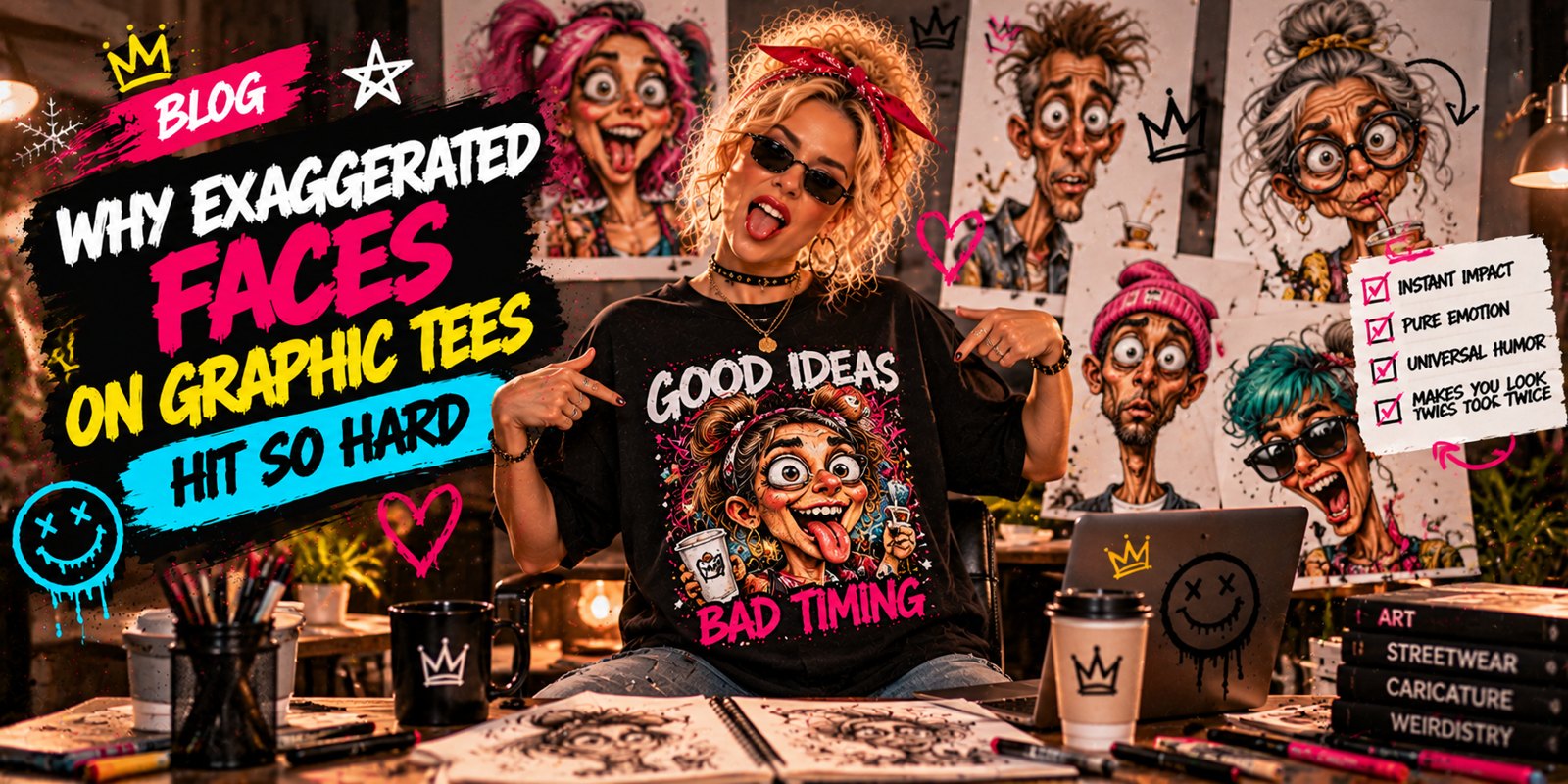
Human brains are hardwired to decode facial expressions in milliseconds, meaning blown-out physical proportions land a sharp punchline before anyone reads a single syllable. A hyper-distorted jawline or eyes bugging out in pure panic cut through the visual static of crowded sidewalks faster than any clever paragraph ever could. You register the absolute breakdown of composure instantly, and the gut laugh follows right behind.
That raw clarity explains the enduring appeal of a caricature art t-shirt. Instead of relying on inside jokes that demand a thirty-second decoding session, wild features deliver an unvarnished emotional state straight to the observer. It turns an ordinary torso into an unmistakable flash of unrestrained comedy.
The Psychology Behind the Instant Recognition Reflex
Your skull contains dedicated neural wiring built solely to dissect human expressions in fractions of a second. When an illustrator stretches those anatomical rules into pure rubber, the recognition reflex triggers before logic catches up. Nobody requires an explanatory paragraph to diagnose raw existential panic when cheekbones melt toward the collarbone and foreheads balloon outward. The gut registers the visual punchline instantly because distortion amplifies what everyone in the room already feels.
Polite illustrations demand quiet scrutiny, asking onlookers to decode small visual riddles while standing on an escalator or waiting for an espresso. By contrast, an unapologetic caricature art t-shirt commandeers attention through total biological rebellion. Stretched pupils, runaway sweat beads, and comically jutting chins shatter the decorum of sanitized public spaces. The graphic lands like a sensory reflex hammer, bypassing the conscious analytical loop entirely.
Picture glancing across a crowded transit platform at rush hour and instantly clocking a stranger's mental status purely through bulging cartoon eyes and an impossibly slack jaw stamped across their chest. Nobody squints across twenty feet of dirty yellow tile trying to read fine print or unpack cryptic iconography. That warped visage operates as high-contrast emotional shorthand, slicing straight through commuter brain fog with effortless clarity.
That velocity matters because modern streets and subway cars are saturated with low-grade sensory clutter. Neon storefronts, passing delivery vans, and glowering smartphone screens battle furiously for every scrap of human vision. Dense typographic statements demand close proximity, proper lighting, and genuine reading effort. An outrageous visual grimace requires none of that overhead, transmitting unhinged exhaustion or manic morning delirium in a single blink.
The technique resonates because everyday civilization demands relentless emotional buffering. People spend forty hours a week trapped in elevator pleasantries, hiding genuine burnout behind tight, customer-service smiles. Wearing an exaggerated, panic-stricken face on cotton throws that artificial composure into the shredder. It swaps timid diplomacy for feral, relatable clarity, letting a wild set of stretched nostrils carry the entire comedic weight.
Text Explains While Exaggerated Faces Reveal
Reading a clever slogan demands unnecessary labor. The bystander waiting in line at the bakery has to squint, parse the syntax, decode the irony, and decide if they care enough to smirk. A radically warped face requires zero literacy. You register pure panic, unhinged glee, or crushing defeat in a fraction of a second, long before the brain has time to debate grammar or second-guess emotional tone.
Text alone often feels lightweight on casual apparel because words remain emotionally detached from the torso. Slogans float across the chest like dry warning labels stuck to a cardboard box. Warping facial anatomy changes the stakes completely, giving an understated sentiment the physical momentum of a runaway shopping cart. It transforms abstract snark into an immediate, embodied reality.
A piece like the Zero Clues Full Confidence Shirt works because smug self-delusion becomes undeniably funny when blown up into pure comic arrogance. It suits anyone who has endured a project partner steering a presentation straight into a ditch with unearned, absolute authority. You do not need a three-line caption explaining that specific boardroom catastrophe. The inflated swagger delivers the punchline in a single visual strike.
This dynamic explains why hyper-expressive character prints easily outlast trendy digital slang. Buzzwords expire the exact moment a television commercial borrows them, but raw human dysfunction rendered with theatrical intensity never goes stale. When eyes bug out or a jaw unhinges in frantic defiance, the graphic performs the breakdown rather than simply summarizing it.
Relying purely on typography leaves far too much room for polite indifference and vague shrugs. Distorting the features strips away that safety net, dragging the concept out of polite irony and planting it firmly into physical slapstick. It forces the outside world to see the joke, register the manic tension, and share the absurdity without needing an instruction manual to guide the reaction.
Subtlety Usually Fails on Cotton
Design purists love preaching the gospel of quiet minimalism. They insist that genuine wit whispers, constantly nudging you toward two-word phrases in six-point type or tiny abstract icons tucked discreetly onto a chest pocket. In reality, that advice is creative cowardice disguised as good taste. Understated irony functions well enough in printed essays, editorial magazines, and curated gallery booklets, but cotton is not an archival art museum. Out in the chaotic friction of daily commutes, bustling sidewalks, and loud coffee shops, visual subtlety almost always registers as an accident.
When someone must step directly inside your personal space, tilt a chin, and squint at your sternum to locate the joke, the humor dies on impact. A timid, whisper-quiet graphic simply resembles a stray laundry smudge from across the street. The entire utility of casual streetwear depends on rapid public legibility, which turns half-hearted graphic experiments into completely wasted fabric. A bold caricature art t-shirt solves this friction immediately by swapping polite hesitation for unapologetic, full-throttle visual theater.
The manic, wide-eyed tension represented by the Professionally Unhinged Shirt cuts through office small talk far faster than a polite, microscopic typography pocket hit. In a fluorescent breakroom where exhausted coworkers drone through scripted remarks about quarterly projections, overt physical hyperbole provides immediate comic relief. It broadcasts frantic, relatable chaos across the linoleum floor before anyone can trap you in another pointless conversation about spreadsheet revisions or conflicting calendar invites. That punchy honesty creates a real connection instead of polite workplace boredom.
Cranking up facial proportions and wildly distorting human features eliminates awkward social ambiguity. You hand the surrounding room an unmistakable visual cue that registers clearly from twenty paces away, dodging the painful pause where bystanders try to decipher mixed signals. Satirical clothing demands total commitment to the bit. By leaning hard into exaggerated theatricality, you ditch the timid irony, cut straight through dense urban visual clutter, and establish instant comic solidarity without having to utter a single explanatory syllable.
How Internet Reaction Faces Reshaped Streetwear
For over a decade, digital culture trained millions of phone users to skip lengthy paragraphs whenever an unhinged screenshot could telegraph raw panic in half a second. A polite status update about feeling thoroughly depleted gets shoved aside for a bug-eyed, warped freeze-frame tossed directly into an active thread. That collective reflex permanently reshaped how modern audiences digest comedic timing without ever needing to rely on polite prose.
Transferring that graphic code onto casual clothing feels like an organic, inevitable evolution. When you step outside in distorted, aggressively expressive apparel, you yank those compressed visual punchlines out of glowing feeds and plant them firmly onto the sidewalk. Public transit platforms and crowded grocery aisles instantly inherit the manic comedy of an unmoderated timeline, entirely minus the annoying blue screen glare.
“Distorted street apparel takes the frantic visual dialect of the group chat directly out into open daylight.”
The unblinking, feral fatigue channeled by the Too Tired to Care Raccoon Shirt mirrors the exact energy of a midnight group chat melting down over minor life admin. Picture the collective agitation when somebody uploads an absurdly inflated gas bill or an unspeakable Monday calendar invite right before sleep. The comedy lands without any tedious verbal setup because casual onlookers already recognize that specific posture of utter bureaucratic defeat.
Standard casual fashion often relied on discreet corporate logos or cautious typography to signal safe, polished taste. Modern streetwear built around frantic expressions abandons that sterile distance in favor of shared everyday strain. A wildly warped grimace projects clearly across a loud diner counter, instantly broadcasting your exact frequency to anyone who weathered the same chaotic updates all afternoon.
This immediate punch works because modern culture spent years logging endless subconscious pattern recognition. You never require an instructional manual to grasp why an utterly manic cartoon countenance feels so painfully accurate on a bleak weekday morning. The visual hyperbole clicks on contact, validating unspoken exasperation through pure graphic energy rather than polite, forgettable small talk.
Balancing High Satire with Everyday Styling
High-contrast absurdity collapses into messy clutter the second you surround it with competing patterns. If your torso features a frantic sneer or an elastic scowl, the rest of your outfit must supply quiet stability. You need disciplined textiles to let the manic expression hit with real precision instead of drowning in chaotic visual static.
Tucking an expressive cartoon graphic under an unbuttoned utility overshirt or a clean chore coat frames the satire with clean, deliberate borders. Sturdy canvas and boxy shoulders act like picture matting around warped linework. This sharp contrast tells everyone nearby that the chaotic, bug-eyed portrait staring back at them is an intentional aesthetic choice rather than an accidental wardrobe scramble.
- Dark raw denim jeans provide rigid, uninterrupted indigo that anchors distorted portraits beneath the waistline.
- Skip noisy plaid flannel completely; competing grids instantly scramble the focus of detailed ink drawings.
- Toss on olive utility trousers to introduce utilitarian structure without stealing focus from an offbeat caricature art t-shirt.
- A pair of minimalist leather sneakers stabilizes the silhouette, countering erratic cartoon energy with clean angles.
Structural control marks the difference between deliberate sartorial commentary and rolling out of bed in total disarray. Broad, structured shoulders keep the print flat and readable across your chest. When a loose layer hangs limp or wrinkles across your torso, warped eyeballs and giant grins fold into accidental origami, ruining the comedic timing before anyone even registers the drawing.
Color discipline preserves that clarity. Neutral olive, deep charcoal, faded navy, and washed black serve as steady backdrops for screaming tones or stark monochromatic stippling. Restricting your secondary outer layers to earthy, muted shades prevents your midsection from resembling an overstuffed comic book bin.
Letting the central illustration hold the spotlight while your outerwear handles the framing keeps the joke razor sharp. By pairing severe, utilitarian cuts with unhinged facial distortions, you build a silhouette that feels deliberately curated and visibly confident. The grotesque portrait lands with maximum force when everything framing it stays completely unbothered.
Reading the Room Before You Wear the Grimace
Context shapes how onlookers interpret an extreme visual. An outrageous grimace acts like high-voltage electricity: thrilling when plugged into the right outlet, disastrous when dropped near open water. When the surroundings are casual and upbeat, extreme graphics generate instant rapport. Drop that same intensity into an environment built on rigid decorum, and the reaction flips into genuine bewilderment.
Consider the contrast across regular weekly routines. Wearing an unhinged, distorted grin to weekend trivia or a brewery patio invites laughs and quick nods from nearby tables. The relaxed setting matches the visual ridiculousness. Transport that exact same sneer into a quarterly client review, and the dynamic turns frosty. Instead of sparking a chuckle, you force coworkers to stare intensely at their laptop screens to avoid acknowledging the cartoon meltdown across the conference table.
This friction comes down to social bandwidth. Casual taprooms, indie film screenings, food truck lines, and backyard barbecues give everyone room to enjoy eccentric styling. Strangers possess the mental margin to appreciate bizarre, warped portraiture because nobody is operating under strict obligations. The artwork offers an absurd visual spark that cuts through boring small talk, which makes your outfit feel deliberate and refreshingly brazen.
High-stakes offices and somber gatherings demand emotional discipline and diplomatic tact. Showing up to negotiate a departmental budget with bulging eyeballs and frantic energy plastered across your chest feels tone-deaf rather than clever. Colleagues wrestling with complex spreadsheets or tight quarterly deadlines lack the appetite to parse visual satire. In those moments, intense artwork morphs from sharp irony into an awkward distraction that pulls focus away from actual priorities.
Knowing where to deploy high-octane comedy protects the integrity of the visual itself. The sweet spot is bringing shared amusement into the room rather than causing polite confusion in formal environments. Bold graphic choices always shine brightest where people are already eager to crack a smile and trade banter.
Save the wildest faces for crowds that appreciate the absurdity.