Most people buy a slouchy graphic shirt hoping for runway ease and end up looking like someone stranded on laundry day. You order two sizes up, pull it over your head, and instantly drown in a shapeless block of cotton. The intention was effortless street style, but the mirror reflects pure couch surrender.
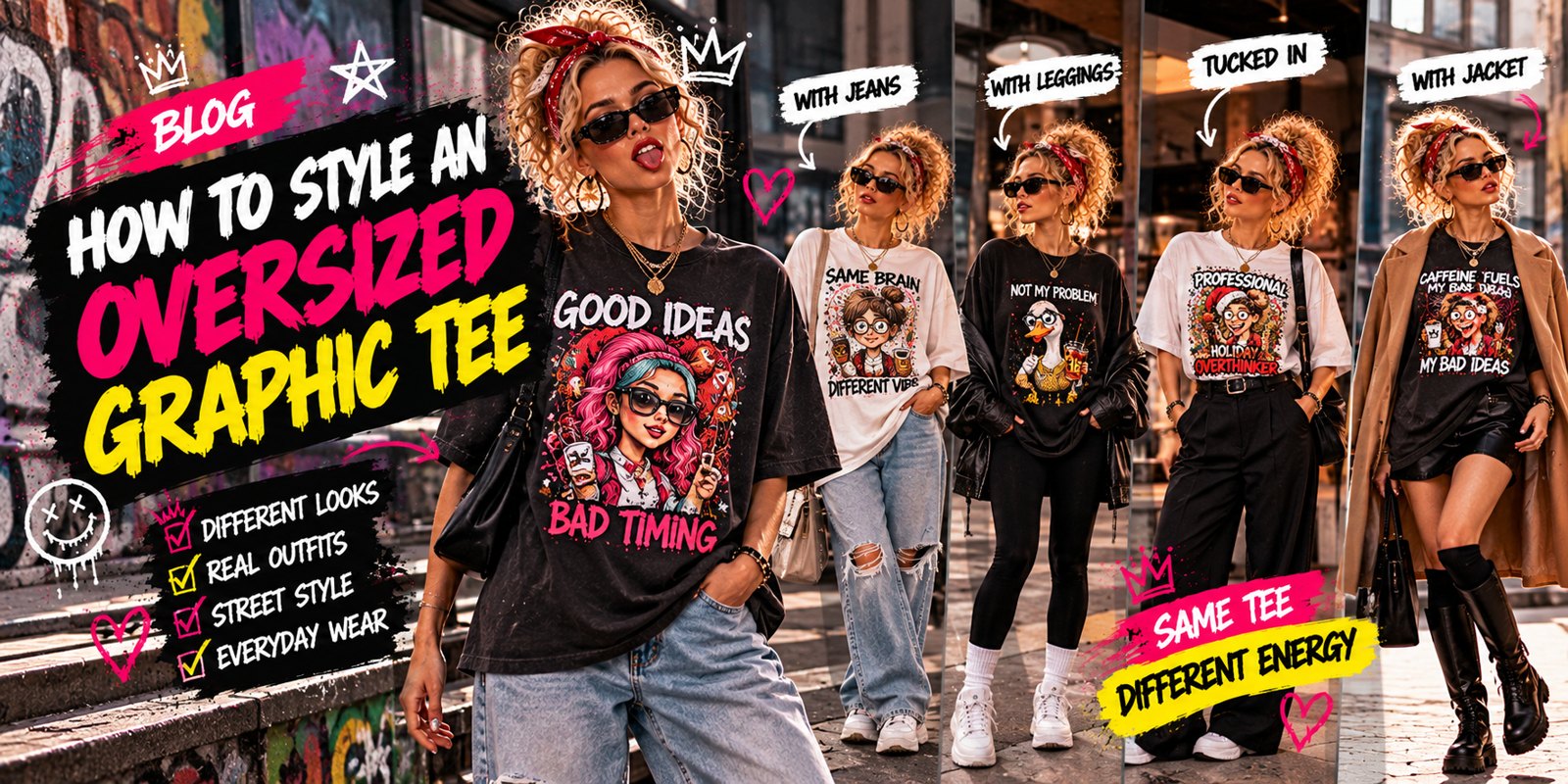
The difference between sloppy loungewear and a deliberate outfit comes down to tension. When you learn how to style oversized graphic tee cuts with real purpose, extra volume stops looking like an accident and starts functioning like modern tailoring.
Baggy clothes only shine when the rest of your frame pushes back. Master the counterweights, set your anchor points, and give that loose fabric some actual spine.
Anchor the Volume with Tailored Trousers
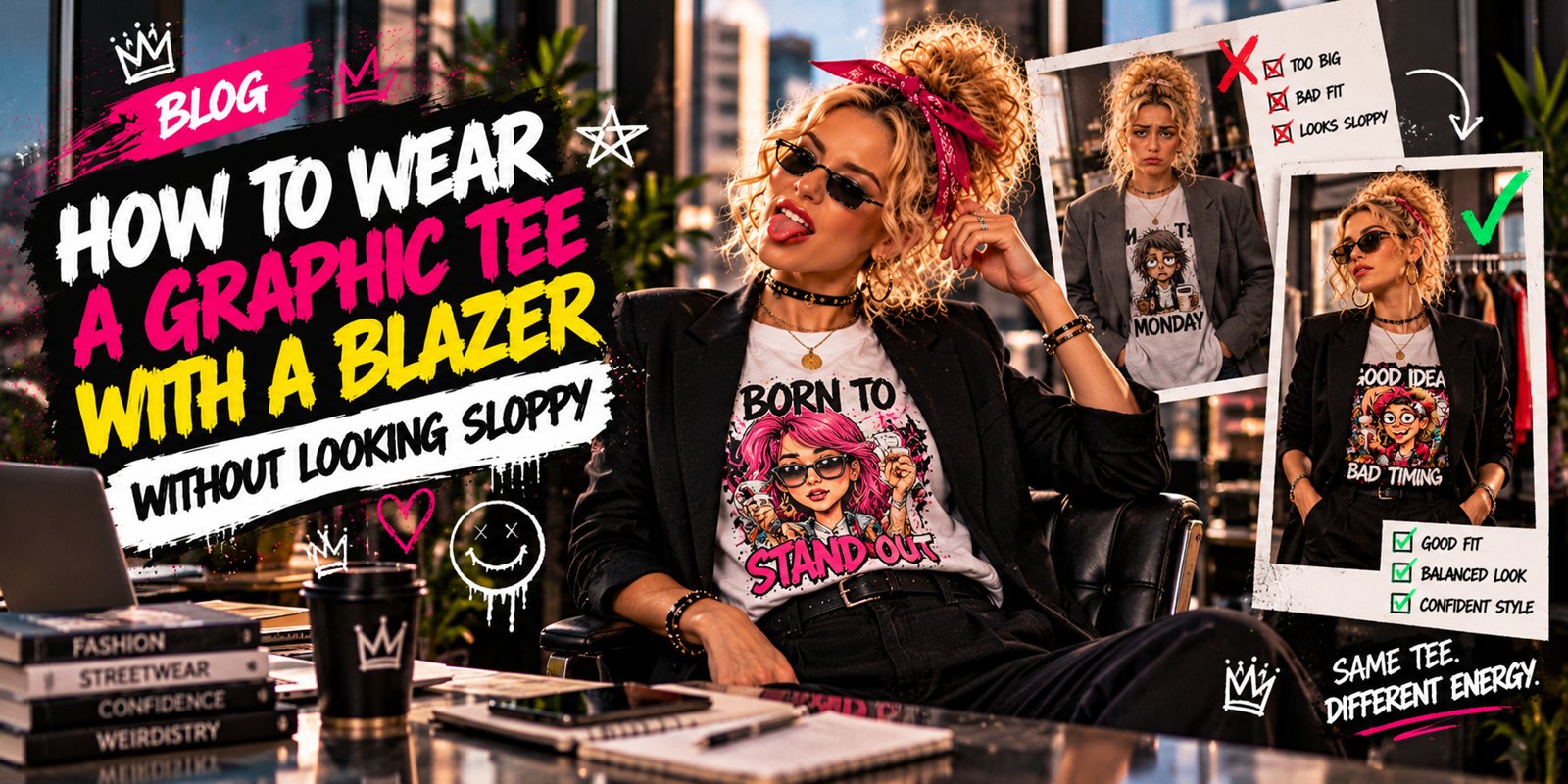
Oversized tees have a habit of drifting from slouchy ease into pajama territory if the bottom half gives up. When you style an oversized graphic tee, the easiest antidote to shapelessness is rigid architecture. Throwing relaxed streetwear against strict suiting fabric generates immediate visual friction. It tells anyone looking that the silhouette was built on purpose, not assembled in the dark five minutes before leaving the house.
High-waisted tailored trousers provide the firm boundaries a massive square of cotton lacks. Look for pants with deep front pleats and a structured waistband that clamps comfortably at your natural waist. The sharp, vertical press of trouser creases cuts through the billowy drape up top, pinning down the sheer volume. You get clean geometry right where the heavy cotton folds meet the crisp wool blend.
Think of crisp charcoal dress pants holding their own against a sprawling front graphic at Sunday brunch. While casual denim or gym sweats would yield to the relaxed top and turn the whole fit into loungewear, charcoal twill brings boardroom seriousness to a loud illustration. You look pulled together while staying just as comfortable as the person at the corner booth wearing gray sweatpants and regret.
To make this pairing click, lean into the tension between formal and casual textures. A sturdy pair of pleated trousers in houndstooth, navy gabardine, or heavy slate wool absorbs the casual weight of the cotton effortlessly. The contrast does the work for you: the trousers supply the polish, while the graphic keeps the tailored cut from feeling stuffy or corporate.
Anchor the base of the outfit with footwear that respects the weight of the trousers. Sleek leather loafers, chunky lug-sole derbies, or crisp low-profile sneakers keep the proportions intact from collar to hem. By grounding the loose top with razor-sharp slacks, you hit the exact midpoint between high-effort tailoring and zero-effort streetwear.
French Tuck Just the Center Front
The absolute fastest way to ruin a boxy silhouette is the aggressive 360-degree tuck. Cramming yards of loose fabric down the front and back of your jeans creates a bulky ring around your hips. You end up fighting your zipper all afternoon just to walk around looking like an inflated inner tube.
The smarter remedy is strict surgical restraint. Grab a thumb-width pinch of fabric dead in the middle of your hem, push it roughly two inches behind your button, and leave the rest alone. Picture tucking an inch right above your belt buckle while the back hem billows loosely over your rear pockets.
This single anchor point establishes your waistline without trapping you inside a rigid grid. It allows the back and sides to cascade naturally, which keeps the slouchy posture intact while proving you actually own a pelvis. A piece like the Same Brain Different Vibe Oversized Graphic Tee thrives on this exact tension, balancing an unbothered slouch with enough sharp structure to survive a spontaneous dinner plan.
Resist every urge to tuck anything near your hips. Stuffing cotton into your side seams produces strange, flared fabric wings that puff outward the second you take a step. Keeping the tuck confined strictly to the front few inches allows the side seams to fall straight down toward your sneakers, maintaining clean vertical edges.
To properly style oversized graphic tee rotations, the final tuck must look effortless rather than choreographed. If the folds appear measured with a ruler, you pulled too tight. Give the fabric a gentle tug upward after standing up, let gravity drop the cotton where it lands, and resist the temptation to fuss with it.
Stop Hiding Beneath Long Outerwear
Every generic seasonal style guide urges people to throw floor-sweeping cardigans or flowing dusters over roomy basics under the guise of creating long, slimming lines. It is bad advice that operates on wishful thinking rather than geometry. Stacking an ankle-skimming outer layer on top of a loose, voluminous tee does not streamline anything. Instead, it merges two heavy silhouettes into an indistinguishable block of moving fabric, making you look like an unmade hotel bed wandering into a coffee shop.
When an outer layer matches or exceeds the drooping hemline of a giant shirt, it eliminates contrast completely. The garment has no rigid edges to push back against the slouchy cotton, so every seam surrenders to the pull of gravity. The artwork across your chest gets folded into deep valleys of knitwear with every stride, muting the entire design and turning an assertive graphic into accidental sleepwear.
The real solution is violent horizontal contrast. Picture throwing a boxy moto jacket that stops squarely at the high hip over an exaggerated hemline. That blunt, cropped border instantly carves the outfit into distinct mathematical segments. The extra cotton peeks out from beneath the bottom trim like an intentional tiered hem, immediately communicating that the excess volume down below is a chosen proportion rather than a laundry accident.
A cropped trucker cut from heavy raw denim or a stiff canvas zip jacket functions the exact same way. Rigid shoulder lines and a truncated lower hem supply the geometric backbone that floppy jersey fabric lacks on its own. Because the outer shell terminates early, it highlights where your torso sits in space, anchoring your frame without demanding a messy tuck or awkward gathering.
Reserve your trench coats and sweeping sweater wraps for tight base layers that actually need the drama of added motion. With an expansive top, you need perimeter control, not extra yardage billowing around your knees. Opt for outerwear that cuts clean and finishes high, letting the hem of the shirt hang free while the jacket dictates the actual architecture of your outfit.
Balance the Width with Bike Shorts
Playing with severe structural contrast solves the floating fabric problem before it starts. Smashing a billowing, square-cut torso against second-skin athletic Lycra turns excess drape into an intentional design statement. The abrupt break in density acts like an anchor point. A fluid, breezy top half earns complete freedom to drift when your legs provide relentless, streamlined definition directly underneath. That sudden change in tension signals that every square inch of volume belongs there on purpose.
Picture the morning coffee run where your shirt hits mid-thigh over matte black shorts, ribbed white crew socks, and chunky trainers. The wide drop-shoulder expanse drifts past your hips, while the exposed band of dark performance fabric snaps the silhouette taut right before your knees. It projects zero hesitation: fast-moving, crisp, and completely composed while waiting in line for cold brew under harsh cafe lighting.
“Smashing an airy, expansive top against high-tension Lycra instantly turns extra fabric into sharp geometry.”
This visual formula operates brilliantly with the Born To Stand Out Oversized Graphic Tee, giving its ironically boastful moniker center stage without drowning your frame in slack yardage. Because the title already pokes fun at self-importance, the stripped-down, sporty base keeps the tone dry and unfussy rather than chaotic. The lean lower half lets the front artwork command attention while your outfit stays functionally agile.
Dialing in the reveal distance is where the magic happens. Shorts that creep all the way down toward the kneecap chop up your vertical lines and sap the momentum from your stride. Aim for roughly three finger-widths of tight fabric peeking beneath the bottom seam of the tee. That quick flash of taut contour delivers clear visual proof that the generous cut above is a considered aesthetic choice.
Layer Under an Unbuttoned Work Shirt
Rigid outerwear solves the challenge of runaway volume by giving a slouchy torso sharp boundaries. When you leave a heavy canvas overshirt completely unbuttoned, its front plackets drop straight down like two parallel plumb lines. Those crisp edges instantly bisect the wide horizontal plane across your chest, carving away visual width while preserving the effortless drape underneath.
Picture an open khaki utility button-up framing an obnoxious slogan during an afternoon stroll through an art gallery. The utilitarian chest pockets and reinforced stitching supply grounded, practical grit, giving the irreverent lettering underneath room to land with dry comedic precision. The Normal Left The Chat Oversized Graphic Tee suits anyone eager to signal total social detachment while wandering through polite, hushed exhibits.
Material density dictates whether this combination succeeds or falls apart. Thin chamois or limp flannel will collapse directly onto the knit beneath, clinging to your hips and creating lumpy chaos along your sides. Heavyweight duck cloth, thick drill twill, or structured chore jackets possess the natural rigidity required to stand away from your ribcage, acting like firm side walls that keep the graphic dead-center.
- Expose your forearms: Flip the rigid sleeve cuffs back once or twice to break up the long stretch of heavy textile and anchor your wrists.
- Calibrate hem lengths: Check that your inner tee hangs only two or three inches below the jacket line to maintain balanced proportions.
- Flatten the collar points: Press the outer collar flat against your shoulders to establish a crisp triangular perimeter around the ribbed neckline.
- Ditch all closures: Keep every button and snap undone, because fastening even a single bottom stud gathers loose fabric into a bulky pouch.
Treating a sturdy work shirt as an open frame lets you navigate unpredictable weather without sacrificing deliberate geometry. You build depth across your torso, expose just enough cheeky personality, and keep your body from reading like a shapeless monolith. The structured canvas shoulders take command of your upper line, while the unbuttoned front leaves your stride completely unencumbered.
Commit Fully to the Wide Puddle Hem
Sometimes proportional harmony is a polite styling compromise you can safely ignore. Pairing an expansive printed top with wide trousers works best when you completely abandon timid, middle-of-the-road cuts. A semi-relaxed chino paired with a drop-shoulder crewneck reads like an accidental sizing mishap from an online cart you forgot to review. Going all-in on a full skate drape signals deliberate visual confidence instead of laundry-day indecision. You either commit to the roominess or appear hesitant.
Managing volume from top to bottom demands strict attention to textile weight and line. Slacks cut from flimsy rayon or paper-thin cotton will sag against your skin, turning a relaxed cut into a deflated sack. You need substantial yardage that holds its own perimeter away from your calves. Picture baggy carpenter denim pooling neatly over lug-sole boots instead of drowning your feet like an oversized vintage bin find. Rigid workwear canvas and heavy twill maintain a crisp, structural perimeter down each leg, creating clean visual lines that never collapse.
Footwear operates as the non-negotiable anchor for an exaggerated puddle hem. Low-profile runners or thin canvas slip-ons disappear completely under broad pant legs, creating the bizarre illusion that your ankles dissolve directly into the asphalt. Heavy combat boots, chunky platform creepers, or thick commando soles offer the necessary ground clearance. A substantial sole creates an unyielding shelf for wide cuffs to stack against, keeping your trouser hems crisp while preventing them from dragging dirty rainwater across the crosswalk.
Keep the lower edge of the shirt entirely uninhibited. Wedging yards of boxy jersey into a high-rise waistline generates an awkward bulge around your beltline, which abruptly breaks the clean vertical drop. Letting a square-cut torso drape straight past your hip creates an uninterrupted, fluid column from collar to sidewalk. When both your top half and bottom half command identical physical space, the outfit presents as a cohesive, sculptural uniform.
Big proportions only look sloppy when you apologize for them.