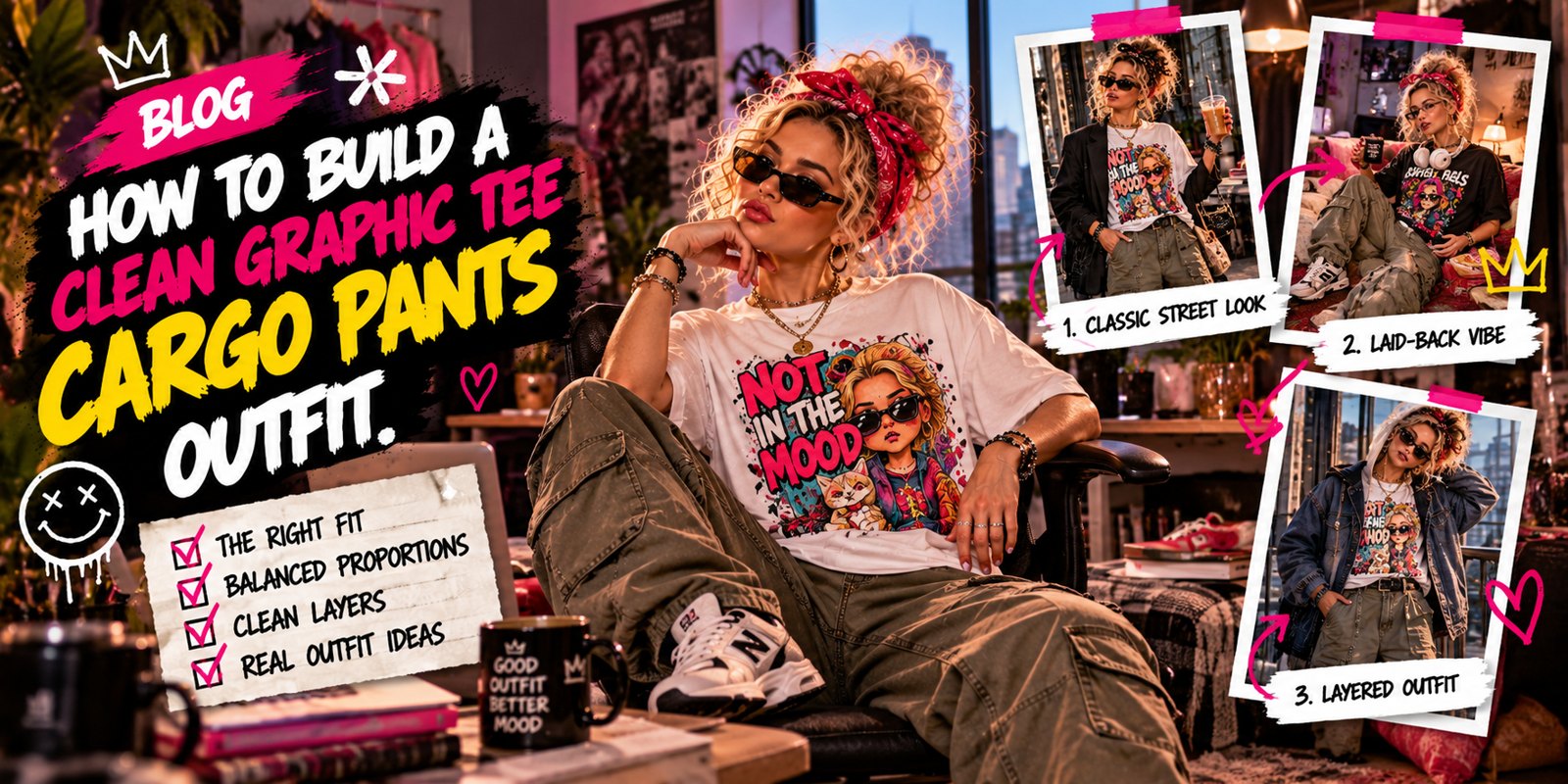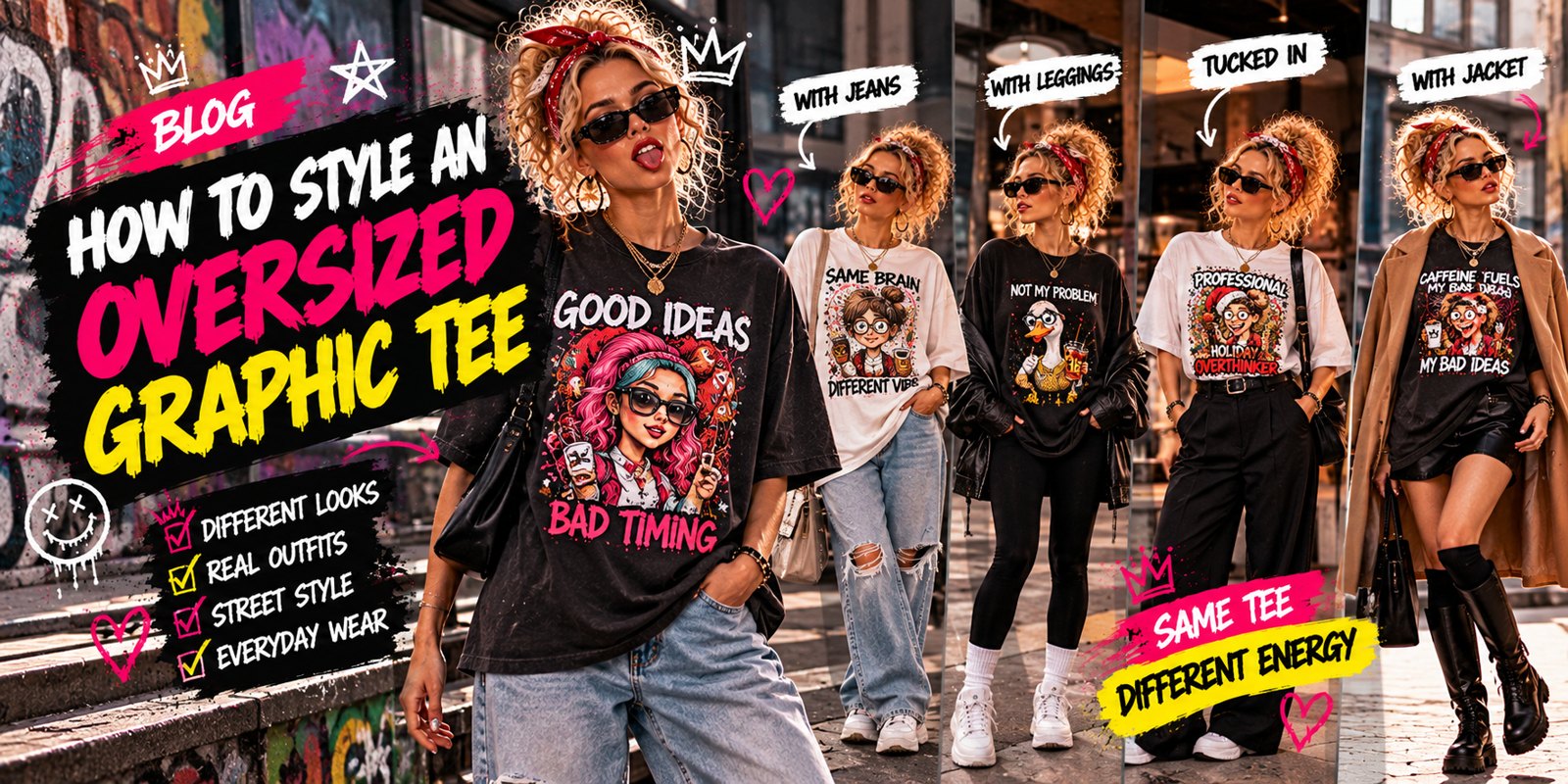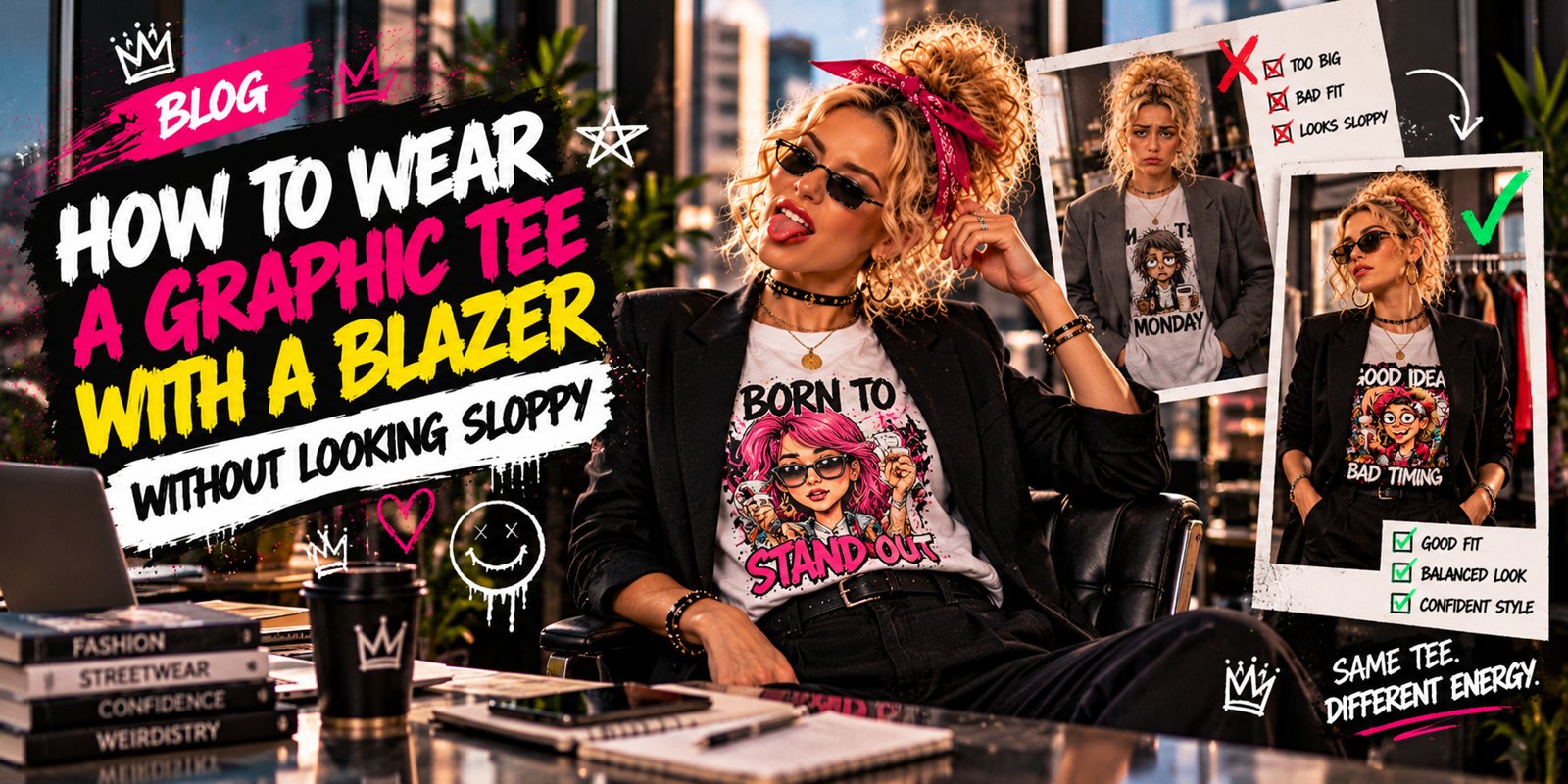
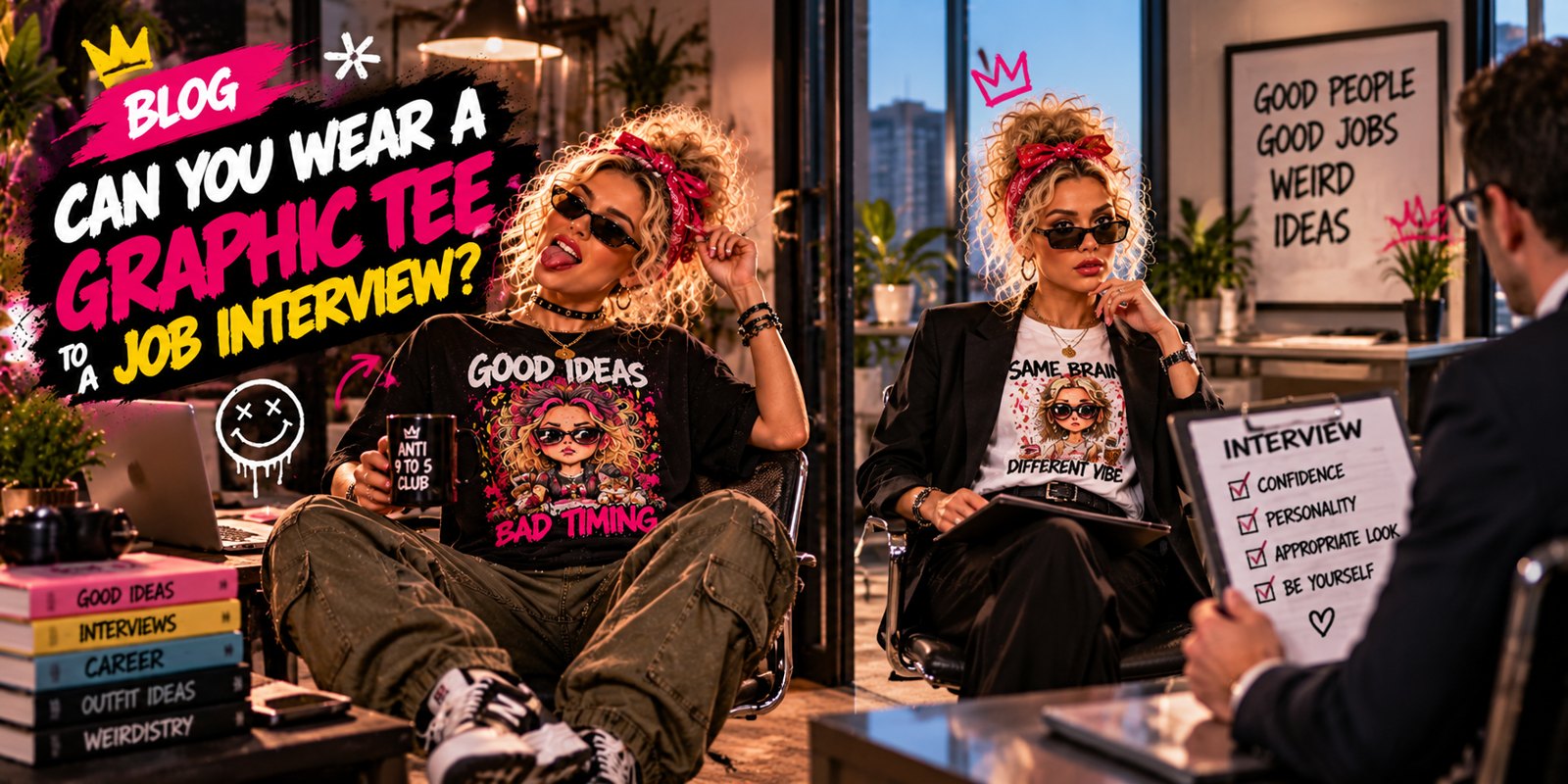
Walking into an office wearing a printed shirt is either an act of total cultural fluency or a fast track to the rejection email pile. Pulling off a graphic tee job interview gamble requires an almost forensic understanding of where self-assurance ends and career sabotage begins.
Corporate dress codes have splintered into absolute chaos, leaving you to decide whether a stiff collar signals competence or a total lack of pulse. Showing up in cotton with an opinion acts as a sharp power move, provided you treat the print like seasoning: distinct enough to prove you have taste, yet restrained enough to keep the room focused on your actual skills.
Read the Room Before the Meeting
Every workplace establishes unspoken sartorial codes within minutes of your arrival. Old-guard financial institutions, maritime legal practices, and legacy management consultancies still view tailored wool and pressed collars as baseline proof of seriousness. Walking through those mahogany doors in screen-printed cotton reveals a severe blind spot for professional customs. The hiring committee decides you lack situational awareness before you take a seat at the conference table.
Transfer that same outfit across town to an independent branding studio, an agile software collective, or a specialty roastery, and the expectations invert entirely. Corporate wool and silk neckwear send immediate signals of creative timidity. Picture walking into a design studio where the creative director greets candidates in skate shoes and raw denim while holding cold brew. Showing up in a rigid three-piece charcoal suit makes you look like an auditor ready to repossess their espresso machine.
Succeeding with expressive casual clothing requires tuning your radar to the company's daily operational rhythm. Modern, visual disciplines celebrate authentic perspective over performative stiffness. In those distinct environments, stepping through the door in thoughtfully chosen casualwear signals that you grasp their aesthetic wavelength. You look comfortable with your craft rather than desperate to hide behind stiff polyester blends.
Do real reconnaissance across the firm's recent work before you select your morning outfit. Look at how team leads present themselves during candid product demos, recorded developer showcases, or portfolio reveals. If the staff spends forty hours a week in utilitarian chore jackets, relaxed carpenter trousers, and illustrated jersey knits, arriving wrapped in boardroom pinstripes shows poor prep work. Harmonizing with the existing team energy matters twice as much as any individual garment on your shoulders.
Your clothing functions as an instantaneous diagnostic tool for cultural literacy. When you adjust your silhouette to match the natural baseline of the company, the interviewers stop analyzing your hemline and focus entirely on your portfolio. Demonstrating that you can decode an office ecosystem before negotiating an offer reassures the hiring panel that you will integrate smoothly into their daily collaborative workflow.
Irony Needs to Support Your Competence
Once you confirm the workplace tolerates casual attire, the typography across your torso carries serious editorial weight. Tone behaves like a high-wire act during a hiring assessment. Handled with finesse, a clever phrase suggests you understand the oddities of your industry while keeping an easy sense of perspective. Handled poorly, it reads like premature burnout before you even review an offer letter.
The operational divide sits between self-deprecating wit and outright contempt for basic employment. Hiring managers search for teammates who navigate project pivots with grace, not cynics who broadcast resentment toward calendar invites. When a slogan hints that you detest collaboration or dread standard accountability, interviewers will reasonably assume you bring unnecessary friction to the team.
Wearing the Zero Clues Full Confidence Shirt shows you have a sharp sense of humor without telegraphing that you resent showing up on time. The statement works because it playfully reframes the universal awkwardness of pitching professional skills to strangers. It invites the room to laugh along with the stress of the hiring process rather than questioning your commitment to the actual work.
Contrast that approach with prints that celebrate antisocial habits or openly mock management. Those motifs earn cheap applause on message boards, but across an evaluation desk, they signal immediate defensiveness. An interview committee should spend mental energy assessing your portfolio and communication cadence, not wondering whether you will cause problems in group channels.
Charm always outperforms hostile defiance when a steady salary is on the line. Let clothing prove that you can navigate professional environments with poise, sharp humor, and clear self-possession. When irony reinforces your competence instead of undermining it, the choice signals emotional intelligence rather than poor judgment.
Structure Rescues Casual Cotton Every Time
Sitting across a conference table in an unsupported crewneck makes your preparation look like an afterthought. An unassisted cotton top risks reading as indifference rather than intentional ease, leaving your presence adrift against the sterile backdrop of a modern meeting room. To pull off printed cotton in front of a hiring committee, you need crisp outer lines that frame your collarbone and establish visual discipline the moment you cross the threshold.
An unstructured wool blazer, a substantial cardigan, or a boxy twill chore jacket provides that necessary architecture. These outer garments introduce structured shoulder seams, crisp lapels, and clean vertical borders that securely anchor your torso. The jacket functions like gallery matting around an illustration, turning everyday cotton into a deliberate centerpiece rather than an accidental default setting.
Tucking the Look Busy Panic Later Shirt beneath dark wool trousers and an overshirt tells the room the styling was intentional from home. For someone meeting a director to wrangle chaotic quarterly deadlines or align fractured project teams, that specific joke lands because the surrounding tailoring proves you manage stress with dry composure. The crisp wool balances the office-culture satire, demonstrating that you understand executive presence without muting your personality.
Everything sitting below your belt line must demonstrate that identical level of rigor. Faded denim or scuffed canvas sneakers will swiftly validate every lingering suspicion the interview panel harbors about your attention to detail. Swap slouchy bottoms for pleated cotton chinos, pressed flannel trousers, or rigid dark indigo selvedge, then ground the lower half with substantial leather derbies or clean penny loafers.
Effective styling here hinges on stark, unmistakable contrast. When every supporting garment radiates deliberate tailoring, dense fabric weight, and undeniable polish, evaluators interpret the central graphic as an articulate aesthetic statement rather than careless morning apathy. You project the calm posture of a candidate who understands traditional workplace decorum thoroughly enough to tweak it with absolute purpose.
Playing It Safe Can Lose the Job
Standard career guidance tells applicants to sand down their rough edges until nothing memorable remains. That docile playbook might secure an entry desk in municipal accounting, but modern creative directors look for spine, sharp sensibilities, and distinct perspective. Strolling into a modern design studio dressed like an off-duty flight attendant communicates fear rather than polished competence. You trade personal voice for camouflage, leaving evaluators with zero sense of what you might contribute to their actual creative output.
Artistic departments thrive on tension and clear taste, meaning timid choices carry massive hidden penalties. Wearing the I'm Not for Everyone Shirt under a dark jacket immediately signals to a forward-thinking brand that you possess an actual viewpoint. That subtle defiance separates you from dozens of identical resumes stacked on the desk. You establish an intentional boundary, proving you understand workplace norms well enough to challenge them with dry wit instead of nervous obedience.
“Aggressive neutrality tells a creative director you will produce work that puts clients to sleep.”
Think of bold styling as an instantaneous screening protocol that protects your future career happiness. When agency founders recoil at an unapologetic chest print, they telegraph precisely how they run client accounts. Teams rattled by clever casual apparel will inevitably suffocate sharp copy, dilute audacious concepts, and micromanage typography into bland mush. Their reaction reveals their cultural appetite before you sign on the dotted line.
- Review the leadership team: founders who post unfiltered industry critiques value candor and distinct visual choices over hollow corporate polish.
- Track the work they celebrate: agencies chasing awards rarely recruit passive conformists who dread standing out in a crowd.
- Protect your daily sanity: taking jobs with risk-averse managers guarantees endless revisions on every ambitious concept you pitch.
Playing defense only keeps you alive for positions that drain your energy. A deliberate, left-of-center wardrobe choice weeds out timid gatekeepers before they waste six months of your life. Landing with an appreciative, forward-moving crew beats winning polite approval from ten risk-averse bosses who will never let you build anything remarkable.
Video Interviews Require Different Geometry
In-person meetings present your full posture and outfit naturally. A desktop lens behaves differently, boxing your upper body into a rigid digital rectangle that abruptly cuts off right at the sternum. Bringing an illustrated crewneck onto a remote hiring call introduces strict physical boundaries. What appears balanced while standing in front of a full-length mirror turns into a messy puzzle once your video feed snaps into a grid of thumbnail squares.
Standard front graphics are printed wide across the torso, running ten to fourteen inches from edge to edge. Typical webcam framing ruthlessly clips those margins. Think of a video grid where a cropped word turns an otherwise harmless joke into an awkward two-letter puzzle. If a friendly slogan gets chopped down to four stray consonants by the bottom edge of your laptop preview, the interviewer spends valuable minutes trying to solve an accidental visual riddle instead of listening to your portfolio breakdown.
- Compact chest logos centered beneath the collar remain visible without competing against your facial cues during conversation.
- Sprawling block typography that extends across the ribs gets trapped off-camera or folds invisibly into your armpits.
- Thin linework and delicate pastels turn into muddy static once network lag and digital compression degrade your video feed.
- Check the vertical clearance so that slouching or leaning back during an answer never hides the core image beneath the taskbar.
Every ounce of visual ambiguity creates unwanted friction during an evaluation. When recruiters squint at your feed to figure out whether a clipped phrase is witty or wildly inappropriate, their train of thought derails. You want the panel dialed into your operational instincts, workflow strategies, and communication strengths, not mentally rearranging cut-off lettering floating near your collarbone.
Run a test call before joining the live room. Open your camera app, settle into your standard working posture, and evaluate the composition with a critical eye. If the graphic looks fractured, clipped at an awkward juncture, or dominated by floating letter fragments, switch to a tighter visual mark or throw on an unzipped jacket to neatly frame the artwork inside the screen borders.
Save the Chaos for After the Offer
The entire hiring gauntlet boils down to risk management. You are asking complete strangers to entrust you with company hardware, private chat channels, and key deliverables. Even in relaxed studio cultures, the initial conversation functions as an audition for your fundamental judgment. The interviewers need absolute certainty that your priorities center on problem-solving and communication, rather than questioning your grasp of everyday professional boundaries.
Before an employment agreement exists, wild aesthetic choices introduce unnecessary noise into the evaluation. A department director cannot tell if extreme visual sarcasm comes attached to elite technical ability or chronic workplace friction. Flashing unchecked absurdity during a screening round forces the panel to guess whether you can navigate an urgent client presentation without causing an incident. Establish rock-solid reliability right out of the gate, because verified skill purchases complete stylistic leeway down the line.
The social dynamic shifts completely once the probationary milestone passes. The second your weekly contributions demonstrate that your deliverables land early and your collaborative instincts are sharp, eccentric taste stops looking like an organizational liability. It transforms into an authentic signature. Proving your baseline value turns your clothes into a non-issue, giving you full permission to drop the calculated restraint.
Imagine celebrating a successful first quarterly review by walking in with an absurd print that would have terrified human resources three months earlier. Because your track record is already locked into company history, that exact visual punchline reads as harmless workplace levity instead of an alarming misfire. The operations lead grins, drops an appreciative comment during morning standup, and gets back to business because your performance metrics are undeniable.
Treat early rounds as a measured visual teaser rather than an unfiltered broadcast of your deepest subcultural obsessions. Signal enough creative autonomy to prove you refuse to think in rigid corporate templates, but back it up with sharp instincts and airtight preparation. Lock down the desk and build trust with the team before introducing the strangest corners of your closet.
Sign the paperwork first, then cause problems on purpose.